
 April 10, 2018 | Nutrition data startup Nutrino, a provider of nutrition-related data services and analytics technology, announced Monday that it has raised $8 million in a Series A funding round, bringing its total funding to $10 million. Nutrino was founded in 2014 by Jonathan Lipnik, now the company’s president and chairman of the board, and Yaron Hadad, its chief scientist. The latest funding round was led by Pereg Ventures, Nielsen Ventures, the venture arm of data analytics giant Nielsen, and Gandyr Group, who were joined by existing investors. The funding will be used to expand partnerships and help grow Nutrino’s food database and nutrition data insights platforms, which is said to be the largest in the world, and collates data from millions of access points and food items globally. With offices in San Francisco and Tel Aviv, Nutrino uses machine learning and artificial intelligence to better understand individual responses to particular foods through feedback from various data points. Its nutrition insights platform, which collects, processes, and analyzes food-related data is a tool used by food and beverage groups, digital health industries, fitness companies, and more. The data and insights collected help Nutrino define an individual’s FoodPrint, or digital signature, of how food affects a person’s body. Nutrino CEO Yael Glassman tells NoCamels that the funding will go toward commercial expansion as well as into expanding and scaling the database. “Our proprietary technology, FoodPrint, uncovers the previously invisible connections between people and their food,” said Glassman in a company statement. “Nutrino is where data meets nutrition, and as we’ve demonstrated in our work with multinational partners around nutrition and diabetes, the opportunity is vast.” Ziv Ben Barouch, Managing Partner of Pereg Ventures said, “Digital Health is predicted to be worth several hundreds of billions in the coming decade…with skyrocketing consumer demand for increased information about what they eat and growing health awareness, nutrition data is the largest untapped sector of this industry, and Nutrino is perfectly positioned to address this opportunity.” Nutrino says that with an estimated 415 million people living with diabetes worldwide, expected to reach 642 million by 2040, the company “can offer smart, data-based, individualized insights for personal nutrition” in order to “empower[s] better food decisions and shape[s] better outcomes for individuals and businesses.”
News Briefs

Nutrition Data Startup Nutrino Raises $10M To Build World’s Largest Food Database

Israeli Pharmacies To Start Selling Prescription Medical Cannabis Products on 4/20
 April 10, 2018 | Israeli pharmacies are set to begin selling medical cannabis products on April 20, or 4/20 which in cannabis culture refers to the consumption of cannabis. Twenty pharmacies will participate in the pilot program in the first stage of the roll-out, CTech by Calcalist reported. The program is part of a push to reform the regulation of medical cannabis led by the Israeli Health Ministry and approved in 2016. Patients with a medical cannabis license will soon be able to purchase products prescribed by their doctors at the local pharmacy instead of the few tightly regulated dispensaries.

Nike Acquires Tel Aviv Computer Vision Firm Invertex
 April 10, 2018 | Nike announced that it has acquired Tel Aviv-based computer vision firm Invertex for an undisclosed amount. Nike said in a statement that it made the deal “to strengthen its digital technology platforms.” The Israeli team “will focus on building groundbreaking innovations to help Nike serve millions of members around the globe.” Nike Chief Digital Officer Adam Sussman said, “The acquisition of Invertex will deepen our bench of digital talent and further our capabilities in computer vision and artificial intelligence as we create the most compelling Nike consumer experience at every touch point.” Invertex CEO David Bleicher said, “Nike’s connection to and understanding of their consumer is unsurpassed and we look forward to joining their team to help drive the Consumer Direct Offense.” Invertex, founded in 2014, combines AI and 3D tech for “scan-to-fit guided shopping experiences platforms that perfectly match people and products.” In 2017, Invertex had raised $2 million in a seed funding led by OurCrowd.
IoT Security Firm Armis Raises $30M
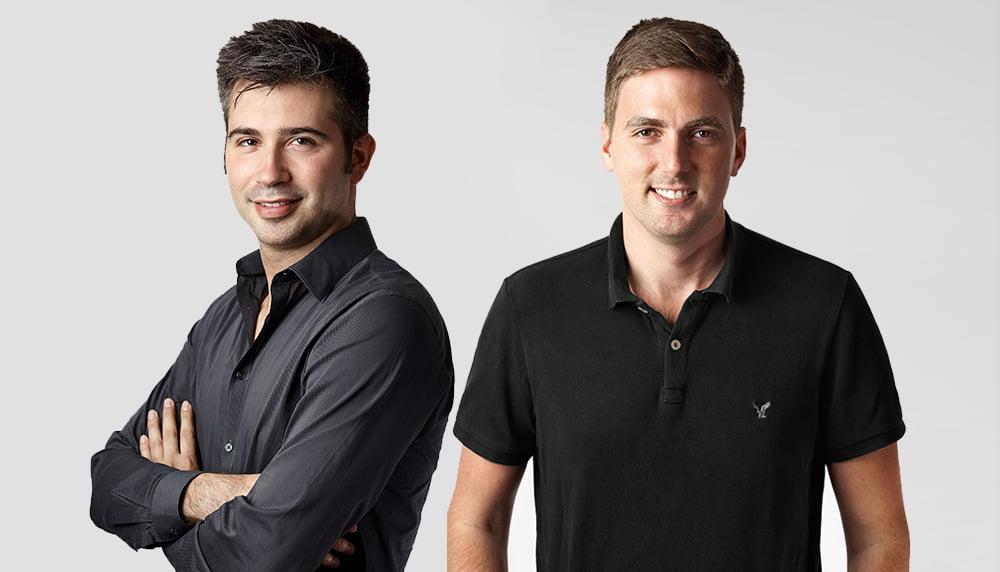
 April 9, 2018 | Israeli IoT security platform Armis announced Monday it has raised $30 million in a Series B funding round. The round was led by Israel-based VC fund Red Dot Capital Partners and California-based VC Bain Capital Ventures. Sequoia Capital and Tenaya Capital also participated in the round as returning investors Armis will use the investment “to meet demand for advanced security technologies that allow enterprises to secure IoT-related digital transformation efforts, expand sales, and marketing, and further develop its device knowledge base and security platform,” a statement said. Total funding for the company is now at $47 million. Founded in 2015 by Nadir Izrael, Tomer Schwartz, and Yevgeny Dibrov, Armis eliminates the enterprise IoT security blind spot, letting enterprises embrace IoT as part of their digital transformation and develop full visibility and control over the IoT devices that operate within their networks, critical to running their business. Armis’ security solution analyzes and classifies these devices in order to identify risks or potential cyber attacks. The company is headquartered in Palo Alto, California and Tel Aviv.
Israeli ‘Smart Sock’ Startup Nabs $1.6M European Grant
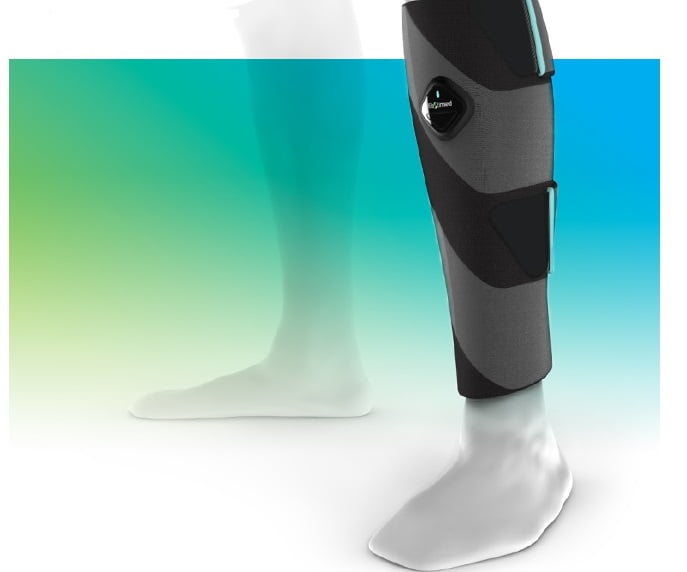
 April 8, 2018 | Israeli sock startup, ElastiMed, announced earlier this month that it selected as one of 57 companies worldwide (and one of four Israeli startups) to earn a $1.6 million grant from the Horizon 2020 program as a part of the European Innovation Council (EIC) pilot. The grant was awarded over two years and will be used “to further product development, clinical studies, production scale-up, marketing and expanding the company’s current intellectual property,” ElastiMed said in a statement. The northern Israel-based startup has developed a wearable medical device that helps improve circulation in the legs for treating venous and lymphatic diseases. ElastiMed’s sock uses battery-operated technology to activate electric pulses that compress and massage the legs to stimulate circulation. The pulses mimic contractions in the calf muscles that in turn increase blood flow. ElastiMed Founder and CEO Omer Zelka said the grant “is another step forward in ElastiMed’s quest to bring its product to market and provide users with a compression therapy solution that they can use comfortably.” The other three Israeli companies awarded grants were Vectorious Medical Technologies, which developed a miniature implant for left-atrial monitoring to detect heart failure and recently raised $9.5 million in a Series B funding round, Yokneam-based Israeli startup PixCell, which develops, manufactures, and markets portable medical diagnostic products for simple blood sampling and analysis, and Jerusalem’s Triox Nano, which is developing a “targeted drug delivery system via synergistic combination of intelligent DNA molecular machines and gated mesoporous nanoparticles.”

Porsche Invests In Israeli AI Software Startup
 April 8, 2018 | Porsche Digital GmbH, a subsidiary that identifies trends and invests in startups for Porsche AG, has purchased a “minority stake” in Israeli startup Anagog, according to a statement from the German sports car manufacturer. Anagog’s AI-powered software allows companies to understand and predict customer behavior in certain situations. With the investment, “Porsche is continuing to drive digital transformation and as a result, can now develop and offer context-based and personalized services,” the statement said. Founded in 2010, Anagog’s technology can be integrated into smartphone apps and is already used in about 100 different apps around the world.

Israeli Entrepreneurs To Host Hackathon For Benefit Of Holocaust Survivors
 April 8, 2018 | Israeli entrepreneurs are set to host a hackathon next month for the benefit of Holocaust survivors in Israel and across the world. The 36-hour event, slated for May 10 and 11, is hosted by TLV Starters, the organization behind the book “Startup Guide Tel Aviv.” The group said the event, dubbed “Spark Hackathon,” is aimed at harnessing “the power of [the] ‘Startup Nation’ to make an impact and create applicable and feasible solutions for the benefit of Holocaust-related issues.” Holocaust survivors, the group says, face a number of daily challenges, including financial, psychological, health, social, and others.” In Israel, some 50,000 Holocaust survivors live below the poverty line, relying on donations and aid organizations to survive. In the US, a third of the remaining 100,000 survivors live in poverty with a majority living on less than $23,000 a year. Noting a “very concerning wave of Holocaust and related denial of historical events,” TLV Starters says the Israeli high-tech sector “holds incredible resources of manpower and know-how” and “can do so much more to support this unique Israeli and Jewish challenge.” The hackathon will aim to “find and create feasible solutions for challenges in education, remembrance, and quality of life of Holocaust survivors,” as well as establish a platform that will enable collaboration and partnerships between companies and organizations.” TLV Starters, founded by Erez Gavish and Natan Leibzon, promises thousands of shekels in prizes for the winner. The initiative is led Gavish, Leibzon, Anat Greenland, Talia Savchenko, and Alon Rapaport and has the support of leading Israeli venture capitalists and entrepreneurs, as well as the Foundation for the Benefit of Holocaust Victims in Israel, Tel Aviv University, the Tel Aviv Stock Exchange, and tech giant Microsoft. Israel marks Holocaust Memorial Day, or Yom Hashoah, on April 12 this year.

Israeli-Founded Hospitality Service Selina Raises $95M
 April 8, 2018 | Central American co-working and traveling hospitality service Selina has raised $95 million in a funding round, Tech Crunch reported last week. The money was raised by Israeli-born WeWork founder Adam Neumann and Dubai investor company Abraaj Group. Selina combines a hotel, co-working space, curated tours, fitness classes, homegrown meals, and volunteering into one hostel. “Instead of just renting out a room in an Airbnb or paying for a hotel room in a boutique hotel, or some co-working space, Selina aims to be a more streamlined way to get that mixture of a community experience, a boutique hotel feel, and the ease of getting a consistent experience across multiple different properties,” Tech Crunch says. The company has 22 locations throughout Central America including Mexico and Panama. It plans to open a new location in Miami this year. The company was founded by Israelis Rafael Museri and Daniel Rudasevski in Panama and has offices in Panama, London, and New York.

Save A Child’s Heart Wins 2018 UN Award
 April 7, 2018 | The UN Population Fund has announced that Save A Child’s Heart (SACH), the international non-profit organization based in Wolfson Medical Center in the central Israel city of Holon, has won the 2018 UN Population Award, according to a statement. Since its founding in 1996, Save a Child’s Heart has provided pediatric cardiac care and lifesaving cardiac surgery for 4,400 children from 55 countries including Africa, South America, and the Middle East. The UN Award was established by the UN General Assembly in 1981 to recognize outstanding achievements in population and health. The Committee for the United Nations Population Award make the selections each year honoring an individual or institution for outstanding contributions to issues of population and reproductive health and to their solutions. The committee is chaired by Ghana, and includes Antigua and Barbuda, Bangladesh, Benin, Gambia, Haiti, Iran, Israel, Paraguay and Poland. Other winners recognized this year include Sir Prince Ramsey, a doctor who has improved health care for thousands of people in disadvantaged communities of Antigua and Barbuda and The Guttmacher Institute, a leading research and policy organization that advances sexual and reproductive health and rights in the United States and globally.
[sharethis-inline-buttons]
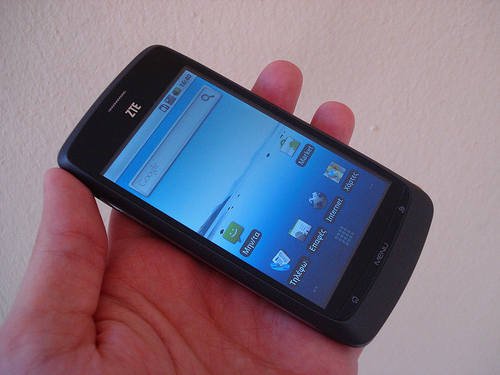
Taboola Signs Deal With ZTE Smartphones For Personalized Content
 April 5, 2018 | Israeli content recommendation giant Taboola has signed a deal with Chinese smartphone manufacturer ZTE Corporation to incorporate a new feature that shows Taboola’s recommended links on some of its phones, the companies said Wednesday. “The module will initially include only links to news and lifestyle stories from existing publishing partners, although the company may eventually expand to include paid links from content marketers,” Taboola Chief Executive Adam Singolda said, according to the Wall Street Journal. No word on which exact publishers will be included in the links. Singolda says Taboola pre-installed on ZTE will be a “publisher-friendly Android version of Apple News, the iPhone app developed by Apple Inc. that comes pre-installed on the company’s mobile devices,” but that it won’t be “a stand-alone app.” The Israeli-founded content discovery platform serves over 360 billion recommendations to over 1 billion unique visitors every month on sites like USA Today, Business Insider, and The Weather Channel. Publishers pay Taboola to include their links as recommendations to refer readers to their websites, and Taboola gets a cut of the ad revenue generated on their site. By installing Taboola on its phones, ZTE will get a piece of that ad revenue share.

Foxconn Will Manufacture Sirin Labs’ Blockchain Smartphone
 April 5, 2018 | Sirin Labs, the Israeli-founded startup, has announced that FIH Mobile, a subsidiary of the world’s largest contract electronics manufacturing company Foxconn, will manufacture its Finney, a blockchain-secured open-source smartphone. The Finney smartphone will help owners store and use digital coins like bitcoin. The agreement will merge the company’s cold wallet hardware, software, integration, and the Sirin OS with FIH Mobile’s development of main components like camera, display, and radio, Sirin Labs said in a statement. NoCamels reported in March that Chinese multinational telecommunications company Huawei was in talks with Sirin Labs to license its SirinOS operating system. Sirin Labs confirmed that the meeting happened, but have not made any announcements regarding it.
Tel Aviv Startup Meta Networks Raises $10M
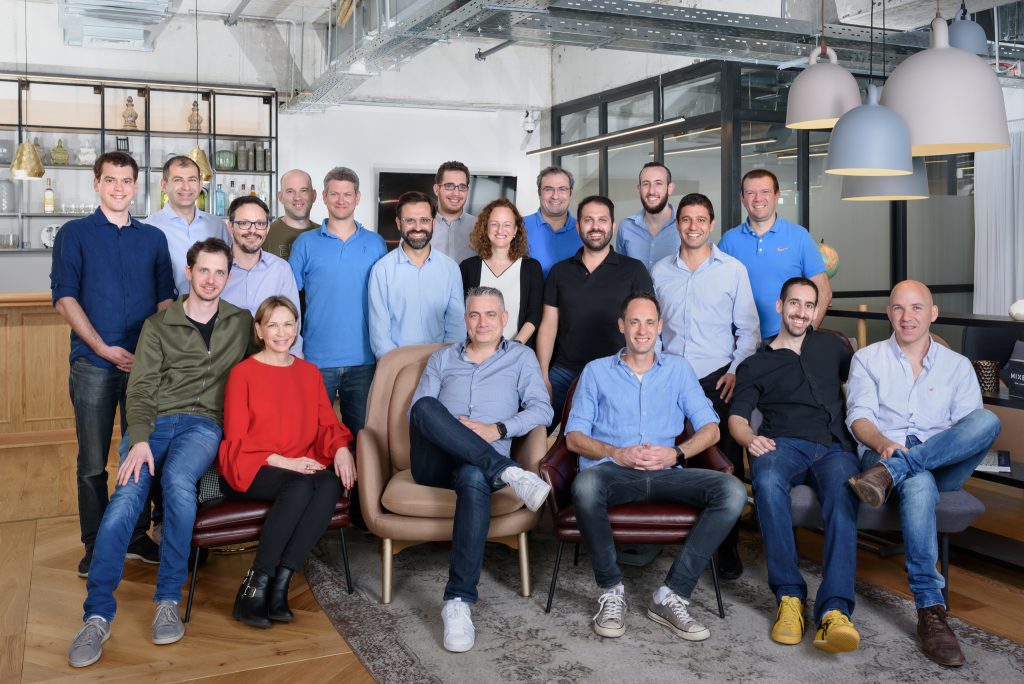
 April 4, 2018 | Israeli cloud networking firm Meta Networks has raised $10 million in a seed funding round, the company announced Tuesday in a statement. The round was led by Israeli VC firm Vertex Ventures and VC fund BRM Group. With the round, it has also launched its flagship network and security platform Meta NaaS (Network-as-a-Service.) The flexible platform is designed to provide on-security capabilities for enterprises and their employees, while reducing the possibility of a security breach. Founded in 2016, Meta Networks connects people, applications, clouds, and sites within a perimeter defined by software.
[sharethis-inline-buttons]

Europe’s Rent24 To Open First Tel Aviv Coworking Space
 April 4, 2018 | Europe’s co-working and co-living space company rent24 announced late last month that it would be opening its first location in Tel Aviv this coming summer, with a site that will offer offices, conference rooms, an event hall, a lounge, and a 400 square meter roof terrace with a wide view of the city from an office tower on Eliezer Kaplan street. The Berlin-founded company, with 24 locations in 4 countries worldwide, is a rival to Israeli-co-founded giant WeWork, which has six locations in Tel Aviv alone (and 10 total in Israel). Robert Bukvic, founder and CEO of rent24, said in a statement that the expansion into Israel was an important step for the company,“The Israeli start-up scene is booming. As one of the most important economic centers in the Middle East, Tel Aviv is a logical hub for us. From here, we want to roll out the rent24 concept to all of Israel and offer a creative and inspiring working environment to both freelancers and companies, from start-ups to corporations.” Users of rent24’s services are able to use the companies facilities in all 24 of its locations worldwide. The company also offers additional services like coliving and an on-site gym. “Our aim is to create the ideal environment for a productive working day – we want our members to enjoy going to work each day,” said Bukvic.

UK Online Retailer ASOS Taps Into Israeli Fashion Startup’s Tech In New Deal
 April 4, 2018 | UK online fashion retailer ASOS has signed a cooperation deal with Israeli fashion startup Zeekit, the companies announced in a statement this week. The online fashion giant will use Zeekit’s technology to dress models with simulated images of fashion items in a deal reported to amount to over NIS 2 million ($560,000) per year, according to Globes. Zeekit’s virtual dressing room feature was integrated into the ASOS clothing app; it allows the company to use an image of a garment and fit it on to models of different body shapes and sizes. The collaboration is expected to shorten the time needed to put a new fashion product on the site. Founded in 2000, ASOS is now one of the biggest e-commerce sites in the world, selling over 80,000 items to customers around the world through distribution centers in the UK, US, China, and some European countries.

Google Sets Up New Accelerator Program In Tel Aviv
 April 3, 2018 | US tech giant Google has selected Tel Aviv, Israel as the site for a new startup accelerator focused on artificial intelligence and machine learning. The accelerator, launched in early March, is part of Google’s Launchpad program, which helps startups build and scale products by “matching them with the best of Google, including people, networks, and advanced technologies.” This is the first time Google has taken the program outside the United States. Roy Glasberg, founder and general manager of the Google Global Acceleration programs and the Google AI Studio, told the Jerusalem Post that “part of the drive to set up the Tel Aviv accelerator is the company’s effort to move from a mobile-first mentality to AI-first.” He said that while “Silicon Valley is the leading, most mature tech ecosystem in the world…after five years of traveling the world, I came back to Israel, which is our best sandbox for experimentation.” Google’s Israel accelerator is currently working with BrainQ, a Jerusalem-based startup that aims to cure stroke and spinal cord injuries through brain-computer interface (BCI.) Aside from its own accelerator, Google also works with more than 150 local startups through different Israeli accelerators.
