
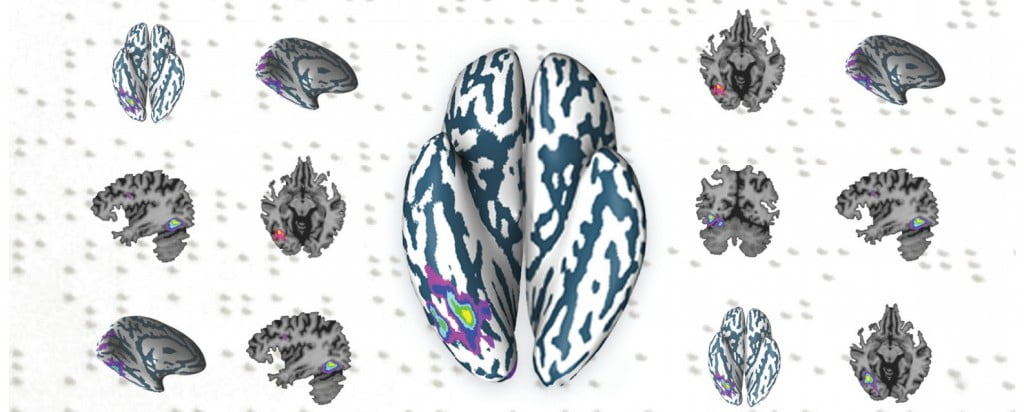
The blind can’t see with their eyes, but they can see with their “mind’s eye” if they are able to activate it through sounds and sensory substitution devices (SSDs). Researchers at the Hebrew University of Jerusalem and colleagues in France have just published an article on this in the prestigious neuroscience journal Neuron.
Related articles
- Israeli Researchers Build First ‘Atlas’ Of Brain Microstructure
- Hebrew University Researcher Invents Side-Effect-Free Family Of Drugs
Common wisdom has it that if the visual cortex in the brain is deprived of visual information in infancy, it may never develop its functional specialization properly, making sight restoration later in life almost impossible.
But researchers have found that congenitally blind people who use specialized photographic and sound equipment can actually “see” and describe objects and even identify letters and words.
“Reading with Sounds”
The study by Prof. Amir Amedi of HU’s Edmond and Lily Safra Center for Brain Sciences and the Institute for Medical Research Israel-Canada, and doctoral candidate Ella Striem-Amit, demonstrated how this achievement is possible through the use of a unique training paradigm using SSDs.
The article, titled “Reading with Sounds: Sensory Substitution Selectively Activates the Visual Word Form Area in the Blind,” was written with help from Prof. Laurent Cohen and Prof. Stanislas Dehaene of Pierre and Marie Curie University’s faculty of medicine, INSERM and the College of France in Paris.
These are non-invasive sensory aids that provide visual information to the blind via their existing senses. For example, with a visual-to-auditory SSD in a clinical, or everyday setting, users wear a miniature camera – connected to a small computer or smartphone – and stereo headphones.
…
To continue reading this article, click here.
Via the Jerusalem Post
Photo by the Hebrew University of Jerusalem
Related posts

Israeli Medical Technologies That Could Change The World

Harnessing Our Own Bodies For Side Effect-Free Weight Loss

Missing Protein Could Unlock Treatment For Aggressive Lung Cancer


Facebook comments