
 December 7, 2017 | Wix has advertised for the Super Bowl for the past three years, but this time, they have decided to move in a different direction. Instead of having their television commercial air during the game on February 4, 2018, the cloud-based web platform will push their focus towards digital ads, the company’s Chief Marketing Office Omer Shai told Calcalist. While Shai affirms that the company’s marketing budget has increased, they are spending the money differently and “adjusting where our audiences are.” Shai says that the company also has their own advertising agency in-house and can produce more of their own content. They also have been looking for web designers and developers who can be reached online rather than on television. Founded in 2006 by Avishai Abrahami, Nadav Abrahami, and Giora Kaplan, Wix has run ad campaigns using recognizable celebs like fashion model Karlie Kloss and Israeli breakout actress Gal Gadot.
News Briefs

Wix To Skip TV Advertising For 2018 Super Bowl

Israel’s Viola Ventures Raises $100 Million For FinTech Fund
 December 7, 2017 | Israel-based Viola Ventures, the investment arm of Viola Group, has raised over $100 million, the company announced this week, for the creation of a dedicated FinTech investment fund, Viola FinTech. Some of the fund’s backers include Scotiabank, a Canadian bank with operations worldwide and Israel’s Bank Hapoalim. Founded in 2000, Viola Ventures invests in Israeli early-stage companies with “transformational ideas.” With close to three billion dollars under management, the group has invested in 200 tech companies. The fund will be run by Daniel Tsiddon, a former deputy CEO of Bank Leumi, who said it will provide financial institutions “with the optimal response to cope with the fast-changing environment. Viola FinTech accelerates the integration of innovative ideas into financial institutions while providing the necessary resources to FinTech companies as they scale to transform the financial sector.” Scotiabank’s Ignacio Deschamps says the bank is “delighted to partner with Viola Group to accelerate the bank’s digital transformation and find the most promising FinTech companies across the globe. He said the “partnership will allow us to access Israel’s innovation ecosystem, including well-established cybersecurity and anti-fraud expertise by leveraging Viola’s unique access to relevant companies and technologies.”

Israeli-Made Spyware Used by Ethiopian Government To Track Dissidents
 December 7, 2017 | The Ethiopian government used Israeli-developed spyware to track and spy on Ethiopian dissidents living abroad during an espionage campaign that began in 2016, according to a new report by The Citizen Lab, a research facility at The University of Toronto’s Munk School of Global Affairs. The spyware, a commercial product known as PC Surveillance System (PSS) and posing as Adobe updates and plugins, was developed by Israel-based Cyberbit, a wholly-owned subsidiary of Elbit Systems, Israel’s international defense company. According to Citizen Lab, the campaign was aimed at supporters of the Oromo ethnic group, who make up Ethiopia’s largest ethnically based regional states, Oromia. Targets included the executive director of the US-based Ethiopian diaspora media outfit, the Oromia Media Network (OMN), who is a prominent Oromo activist, a PhD student in London who was a frequent guest on OMN, and a lawyer teaching at a US university who is also the founder of the Association of Oromo Public Defenders in Oromia. One of the writers of the Citizen Lab report was also a target on the malware during the course of the investigation, the research lab said. Cyberbit told Calcalist when asked for comment that the company’s “products aid the national security of countries in which they are sold, and state agencies in such countries are required to operate these products within the law.” It added that the company “does not operate its products, and like other Israeli and non-Israeli defense companies, it is not fully aware of the way its products are being used in covert by nature activities by intelligence and defense agencies.” Cyberbit said that the “intelligence and defense organizations buying the products are required to use them by law.”

Clal Biotech: Neon Theraputics Raises $106M
 December 6, 2017 | Israel’s umbrella organization of high-tech and life sciences industries Clal Biotechnology announced its US cancer vaccine developer company Neon Therapeutics, where it holds a 5 percent stake, has raised $106 million in a finance round. The company had already announced that it had raised $70 million in the round and later added $36 million to bring it to the current total. The company was already valued at $125 million prior to the round. While Neon says this round helps them further their journey towards IPO, according to a report in Globes, this is also good news for Clal because it will profit from the closing of the round. Clal currently holds 70 percent of shares from the immunotherapy company Vedantra Pharmaceuticals and Vedantra has signed a deal with Neon where it will develop technology used to improve anti-cancer vaccine responses. Clal has said that it has Nasdaq offerings for four of the companies it has recently invested in, including Israeli companies Gamida Cell and BioCancell in 2017. One of the participants in this funding round for Neon was Len Blavatnik’s American holding company Access Industries, who Globes reports indirectly controls Clal Biotech. Clal Biotechnology was founded in 1998 and is based out of Ramat Gan, Israel.
Israeli Researcher Wins Prize For Regenerative Medicine Research
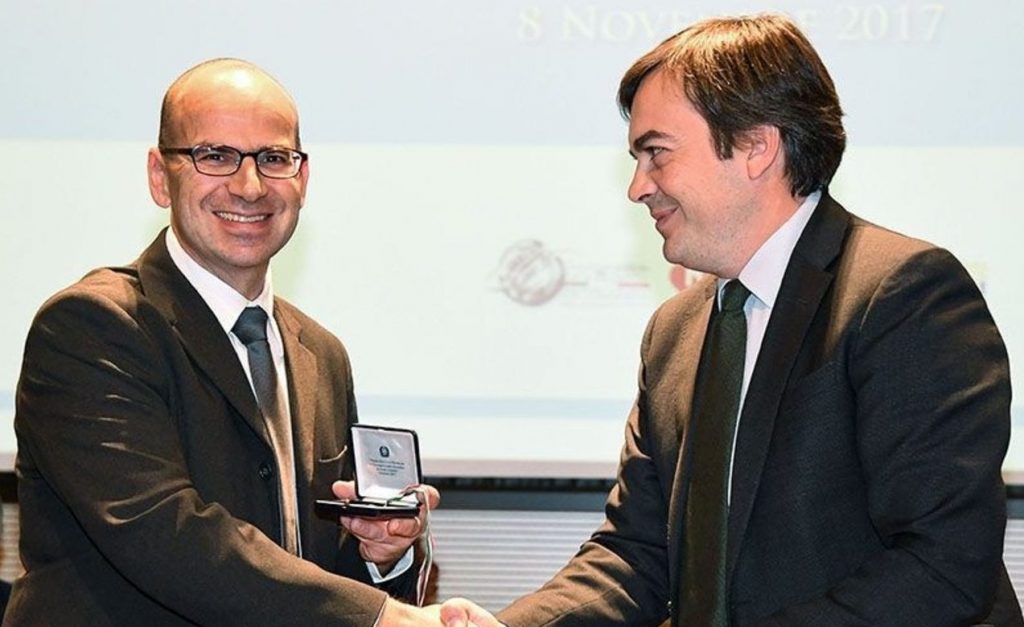
 December 6, 2017 | An Israeli researcher nabbed a prize worth close to $50,000 last month for his work on regenerative medicine research over the past 15 years at the Technion-Israel Institute of Technology. Professor Dror Seliktar, who is also the co-founder and chief scientific officer of Regentis Biomaterials, a biomaterials company that develops tissue repair solutions, was awarded the Rita Levi Montalcini Award, established in 2015 by the Israeli government, at an event hosted by the Italian Ministry of Foreign Affairs in November. The prize promotes “the exchange of scientific scholars between Italy and Israel with funds provided to an Italian researcher to work in Israel and an Israeli researcher to work in Italy,” according to a press release announcing the winner. The award is named after the famed Italian-Jewish scientist and Nobel laureate, honored for her work in neurobiology. Seliktar said receiving the award was “a great honor” and that he was “especially grateful for my collaboration with Tor Vergata University professor Sonia Melino, and look forward to continue researching regenerative medicine technologies in Italy.” He said the collaboration presented “an enormous opportunity to face global challenges while strengthening bonds between countries.” Regentis Biomaterials’ core technology is Gelrin, “a unique hydrogel matrix of polyethylene glycol diacrylate (PEG-DA) and denatured fibrinogen,” which Seliktar originally developed while serving as an associate professor in the faculty of biomedical engineering at the Technion.

Georgia University In Tbilisi Launches Israel Tech Hub
 December 6, 2017 | Georgia’s Business and Technology University, a private university in Tbilisi, is set to open a new education center focused on Israeli technology. The new hub will train students and graduates and provide employment opportunities in Israel and in local Georgian industry. According to a report in the Georgian news agency Inter Press News, the project is at least partly funded by the Israeli government. The amount was not disclosed but is said to be several million. The hub hopes to complete training for roughly 100 students by next year. The university, located in an area dubbed “Silicon Valley Tbilisi,” held an event celebrating the launch of the project, attended by university and government officials in Georgia, the Israeli Ambassador to Georgia, Shabtai Tsur and the Honorary Consul of Georgia in Israel, Meni Benish. University Rector Mikheil Batiashvili said the “project and cooperation with the Israeli side is very important for the University of Business and Technology,” adding that graduates of the program are expected to be involved “in international level projects that provide high pay.” Benish said the project was an investment in the students who would later have the experience to play a major role in Georgia’s tech industry. “At the initial stage, the trained [students] will be remotely employed at companies in Israel. During the next year about 100 people will be trained,” Benish said according to the report.

Mobileye Unveils New EyeQ5 Chip
 December 6, 2017 | Mobileye, the Israeli tech company acquired by software solutions giant Intel in March, has unveiled its newest chip, the Mobileye EyeQ5 for autonomous vehicles, according to a statement from Intel. Earning its name EyeQ5 is the fifth chip of the EyeQ family and is the first to come out after the company’s acquisition by Intel. The chip is designed for autonomous vehicles Grade 4 and 5 (L4/5). While the first silicone chip comes out in 2018, it will be in full mass production by 2020. According to Intel’s CEO Brian Krznitz, Mobileye’s new chip offers higher deep learning performance efficiency. Intel expects the chip to deliver 2.4 DL TOPS per watt, which it claims is 2.4 times more efficient than what the Nvidia tech company claims for its new AI supercomputer, Xavier, designed for autonomous vehicles. TOPS (Tera Operations Per Second) is a recognized benchmark for measuring the performance of chips. As the percentage of TOPSWatt is higher, it produces higher efficiency because the chip produces less heat and is easier and cheaper, saving fuel and providing a greater driving efficiency and range. Mobileye develops vision-based advanced driver assistance systems to help prevent collisions. It was founded by Amnon Shashua and Ziv Aviram in 1999 and acquired by Intel earlier this year for $15.3 billion. The acquisition was completed in August 2017.

Israeli Defense Tech Company IAI Opens Mexico Office
 December 5, 2017 | Israel’s military and commercial aerospace tech company IAI (Israel Aerospace Industries) announced that it opened a new representative office in Mexico. The launch was marked at an event attended by local Mexican officials and the Israeli ambassador to Mexico, Jonathan Peled, IAI said in a press release. IAI’s executive VP marketing, Eli Alfassi, said IAI “consider[s] Latin America, and specifically Mexico, as an important market, with significant potential, both in the defense and commercial markets.” He added that the new office in Mexico, “is aligned with IAI’s strategy to bring its technological solutions to the customer’s door, offering solutions that answer the customer’s precise needs, and providing real-time available and accessible services.” IAI indicated that Mexico’s arms imports grew by almost 200 percent in four years, between 2012 and 2016, “placing the country as the 2nd largest importer of defense systems in Latin America during this period.” IAI co-developed Israel’s world-famous Iron Dome anti-missile defense system as well as the Arrow III interceptor system for long-range missiles. According to the Israeli Space Agency, the Arrow III can also serve as an anti-satellite defense system. Earlier this year, an Arrow III battery shot down incoming Syrian anti-aircraft missile in the first reported use of the system. IAI also develops drones, satellites, naval systems, and radars for military and civilian use.

Israeli Car Sensor Startup Raises $5.1M
 December 5, 2017 | Israeli car sensor company Guardian Optical Technologies has completed a $5.1 million Series A funding round. The round was led by Mirai Creation Fund, a subsidiary of Asian equity management company SPARX Group and Maniv Mobility, an Israeli auto and mobility-focused venture capital fund. Mirai Creation Fund, an investor in automotive giant Toyota, is investing in an Israeli company for the first time, according to a statement from Guardian. The Tel Aviv-based company, which develops sensors that will monitor a car’s interior, says it wants to invest the funding in research and development for its new automatic sensor system. The system combines video image recognition, in-depth mapping, motion detection. A statement from the company says according to their estimations, the senor could save car manufacturers as much as $200 million every year. Founded in 2014 by Gil Dotan and Gideon Carmon, Guardian has developed a 3D sensor that works with seatbelts, airbags and other safety systems to protect drivers and passengers. According to the company, it is also a solution to the problem of babies and pets forgotten in cars.

New Israeli Fund Partners With Waze Co-Founder To Invest In Startups
 December 4, 2017 | Israeli-based company Ayalon Insurance and Halman-Aldubi Investment House have partnered with Israeli co-founder Uri Levine of the social navigation app Waze, to invest in companies of interest for a total sum of $25 million. Levine intends to invest in eight companies, including public transit app Moovit, pension financial analysis service FeeX, and more, which the fund will commit to, as well. The fund will also invest in Refundit, a new company by Levine. Though not specifically part of the fund, Levine will receive 20 percent of fund profits. Fund founders say that partnering with Levine will “enable them to skip over the selection process and present a ready portfolio,” Calcalist reported. This fund is one of five funds competing for government backing following a tender published by Israeli Ministry of Finance. Levine’s company Waze was bought by Google in 2013 in a $1.3 billion deal.
Israeli Researchers Win UK Discovery Award
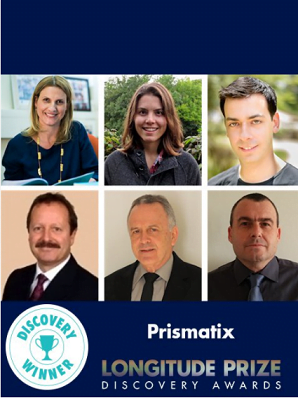
 December 4, 2017 | A group of Israeli researchers from Haifa’s Bnai Zion Medical Center and the Technion, calling themselves Team Prismatix, have won a Discovery Award for promising developments in rapid diagnostics for antibiotic resistance. Team Prismatix is a collaboration between Professor Ester Segal’s research group at the Technion – Israel Institute of Technology department of biotechnology and food engineering and clinicians from Haifa’s Bnai Zion Medical Center. Discovery Awards are UK seed grants helping teams and individuals develop ideas to for solutions to combat antibiotic resistance for the Longitude Prize, a challenge worth £10 million ($13.4 million). The program is run by UK innovation foundation Nesta and Innovate UK as a partner in funding. Thirteen teams from countries such as India, Israel, Australia, Belgium, Holland, the USA, and the UK receive awards between £10,000 and £25,000 (between $13,000 and $34,000.) The technology developed by Team Prismatix determines antibiotic resistance in less than three hours. Bacteria are grown on small photonic silicon chips, using minimal volumes, according to the ACS Nano journal where the findings were published. Leading researcher and Technion PhD student Heidi Leonard said in a statement that “by measuring how light reflects off the surface of those bio-chips, we can determine whether bacteria are growing or dying in the presence of certain antibiotics.” Other researchers on the team include graduate Liran Holtzman; Dr. Ofer Nativ, chairman of urology at Bnai Zion; Dr. Sarel Halachmi, vice chairman of urology at Bnai Zion; and Prof. Leigh Canham from the University of Birmingham, England.

Microsoft Israel Leases Herzliya Pituah Campus
 December 4, 2017 | Microsoft has leased a new campus in Herzliya Pituah. The software corporation has rented a building currently under construction from the Israel Canada group, Tidhar Group, and Acro Real Estate. A report to the Tel Aviv Stock Exchange by Israel Canada says the building will have 44,000 square meters in space on 10 floors with 4,000 square meters per floor and 875 stores and storage rooms. Microsoft will rent the building and adjust it to a finishing level. The company is expected to move its office, currently spread among several buildings in Herzliya Pituah to the new campus. Rent will be a little more than $15 million a year. The three owners who first bought the land in May 2016 paid a little more than $57 million. Microsoft Israel is said to rent the building for office space over the next 15 years, according to a report published by Globes in December 2016.
Mazor Robotics CEO Suspected Of Insider Trading
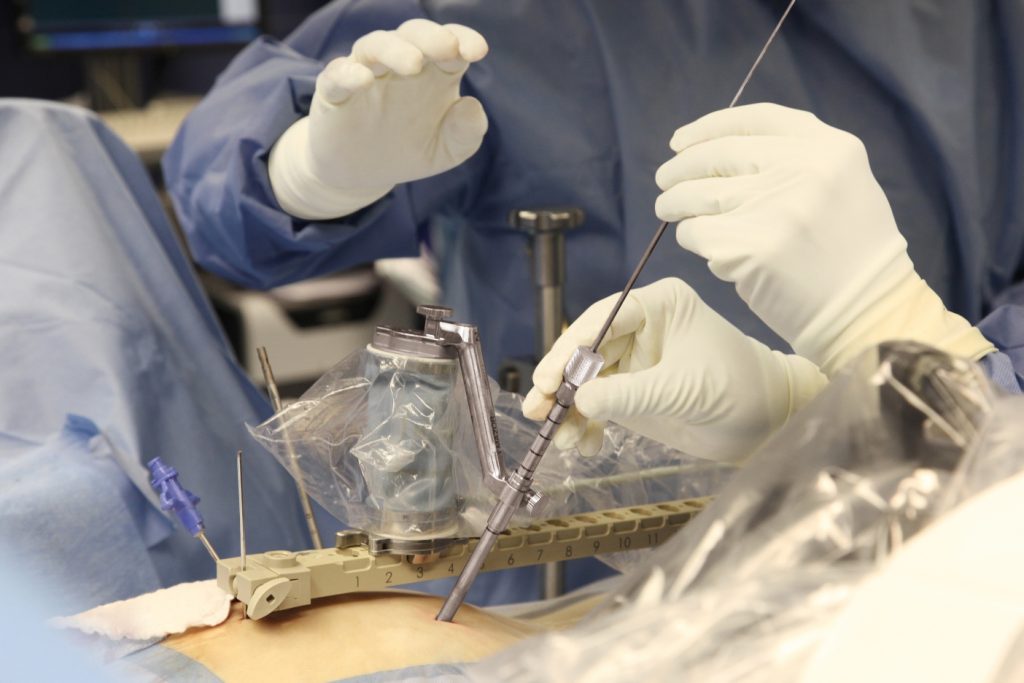
 December 4, 2017 | Mazor Robotics CEO Ori Hadomi has been the subject of questioning during an ongoing investigation by the Israel Securities Authority, which claims it has reason to believe insider trading took place around the time of a May 2016 agreement with medical device maker Medtronic. At the time, the deal was that Medtronic received control of the distribution of Mazor’s spinal surgery systems in the United States. In September, the two companies announced Medtronic would have global control of the distribution. They would also invest an additional $40 million in Mazor, bringing the company’s total investment to $74 million. In May 2017, the Israel Securities Authority raided offices of Mazor after a substantial suspicion arose that information was leaked to associates prior to the public announcement, leading them to buy Mazor securities before everyone else. Senior executives were questioned in the raid and it has now become apparent that Hadomi was also questioned in the investigation as a suspect. Investors were told of the investigation in June 2017. No formal indictments have been submitted so far. If Hadomi was to be found guilty, it would likely severely damage Mazor’s image and business. So far, the Caesarea-based surgical robotics company has not been hurt by the investigation, as Globes reports that since the agreement, its share price has “soared by almost 400 percent.” The strategic agreement combined with the significant rise in the company’s share price and revenue have made it one of Israel’s most successful medical device companies ever, according to Globes. Founder in 2001, Mazor Robotics develops and manufactures robotic guidance systems for brain and spine surgery.

Video Marketing Platform Innovid Acquires Data Company Taykey
 December 3, 2017 | Online video marketing platform Innovid has announced it will buy New York-based data intelligence company Taykey. Financial terms of the deal were not disclosed. Both companies have Israeli founders and deal with the video ad industry. As part of the acquisition, Innovid would have access to Taykey’s technology, big data platform, and 14 web content analysis patents. Taykey’s product development team will also be joining Innovid. Innovid also said the deal would allow its company to provide clients with new data on video engagement including the analysis of the ads within their web and social media content.

Israel May Need To Adjust Corporate Tax Rate
 December 3, 2017 | Israel may have to adjust its corporate tax rate, Finance Minister Moshe Kahlon told a local politics show on Saturday in response to a tax cut approved by the U.S. Senate. The corporate tax rate is already being reduced from 24 to 23 percent, but a lower rate in the U.S. for Israeli companies could persuade those companies to move there permanently, according to a report in Reuters. Kahlon told the Israeli politics program that there are many implications for companies who move to the U.S. and so Israel has to make adjustments. Many Israeli high-tech companies have operations in the United States but research and development centers in Israel. U.S. President Donald Trump says the U.S. tax overhaul could cut the corporate tax rate from 35 to 20 percent, once both the Senate and the House of Representatives match their respective versions of the bill. Israel’s technology industry makes up about 14 percent of the country’s economic output and 10 percent of its workforce.
