
 January 4, 2018 | The Israel Defense Forces (IDF) has formally announced its Unit 3060, an Intelligence Corps unit that had secretly formed in September 2014 through the merging of field intelligence technology units, according to various media outlets. According to the Jerusalem Post, the Unit is comprised of about 400 soldiers who specialize in technology-focused fields. It’s mission, according to JPost, is to “use modern data science for operational and visual intelligence for commanders and intelligence officers to increase the combat effectiveness of the IDF.” Half of these soldiers are career soldiers, and other half are enlisted compulsorily. The unit has a heavy focus on big data, with as much intelligence processed and presented, as possible. The unit is made up of 75 percent men and 25 percent women, JPost reports. The Unit, which reports to the head of Military Intelligence, is sometimes called the “Purple Unit” because of its fusion of blue representing the IDF and red representing the enemy, through their system built to serve intelligence officers in the field. Globes reports that the unit has a data science lab, collaborates with academia and high-tech companies, and have included various tech specialists from other parts of the army.
News Briefs

IDF Reveals Field Intelligence Unit Based On Tech, Data Science

Israeli Life Sciences VC Firm Pontifax Raises $240M
 January 4, 2018| Israeli-based life sciences venture capital firm Pontifax has raised $240 million in a new fund, according to Calcalist, which obtained an internal document from the company. “It is expected Pontifax will invest the fund in the pharmaceutical industry,” Calcalist reports. This is the fifth fund for Pontifax, a company which closed $175 million 2016, the report said citing the presentation. Herzliya-based firm Pontifax, a VC group that specializes in investments in incubation, seed or startups related to life science and pharmaceutical firms, was established in 2004. The firm currently has roughly 60 companies in its portfolio, including Kite Pharma, a cancer treatment company sold to Gilead Sciences in August for almost $12 billion, and ReWalk, a bionic walking assistance system developed in Israel. It is said to have $350 million in assets, according to Calcalist. The VC fund is taking part in the partnership between Chinese pharmaceutical firm WuXi AppTec and Merck Serono to set up a biotech/pharma incubator in Israel in early 2018.
[sharethis-inline-buttons]

Israel’s El Al Airlines Will Begin Nonstop Flights to San Francisco
 January 3, 2018 | El Al Israel Airlines, Israel’s national airline, announced it will begin nonstop flights between Tel Aviv and San Francisco later in the year, according to a report in Reuters. The carrier said it will begin flying the route three times a week with the Boeing 787 Dreamliner aircraft acquired by the company in August 2017. The San Francisco Airport is also about 30 minutes by car from Silicon Valley, home of many of the world’s largest technology companies including Apple, Cisco, Google Intel, and HP. Silicon Valley is in the southern part of the San Francisco Bay area in Northern California. “San Francisco is an important strategic city for El Al. Our target is to take the business segment,” El Al chief executive David Maimon said. El Al began to receive a delivery of 16 new 787 aircraft to replace its current long-haul fleet. The aircraft will continue to be delivered through 2020. Reuters says the company is “facing increased competition from low-cost carriers” including United Airlines, which began flights between the two cities in 2016. In November, the carrier began nonstop flights to Miami from Ben Gurion Airport.
[sharethis-inline-buttons]

Israel Signs New Aviation Deals With 10 Countries
 January 3, 2018 | Israel’s Ministry of Transport signed new aviation agreements with 10 countries, inaugurating new air routes with Brazil and Chile and expanding direct flights with a number of countries including China, Canada, and Jordan, Globes reported. New agreements were also signed last month during the annual conference of the International Civil Aviation Organization (ICAO) in Sri Lanka with Switzerland, the UK, Vietnam, Uganda, Tanzania, Jordan and the Dominican Republic. According to the report, Israel was engaging in talks with Laos and Rwanda for similar agreements.
Poalim Bank, IAI To Collaborate On Blockchain Technology
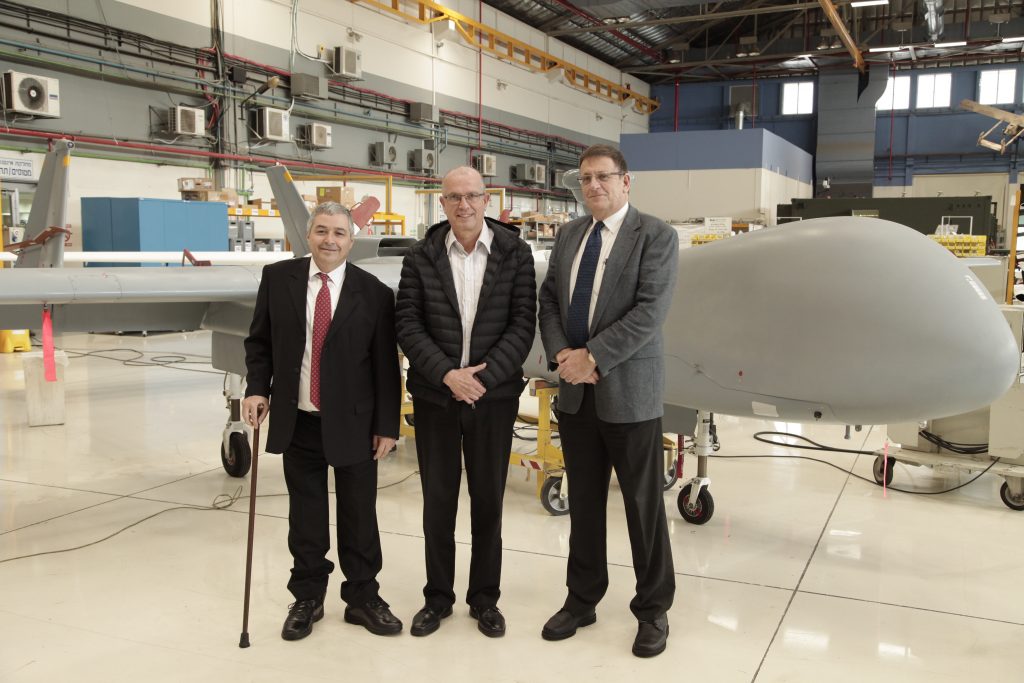
 January 3, 2018 | Israel’s Poalim Bank and the country’s prime aerospace and aviation manufacturer Israel Aerospace Industries (IAI) announced they will team up to collaborate on using blockchain technology to create innovative cyber solutions. Joint research by the two companies will look at how blockchain, the technology behind cryptocurrencies like bitcoin, can be used to develop cybersecurity solutions such as “the secure transmission of information between services and supply chains, user authentication, critical devices, and elements that run with no human intervention and additional solutions for the cyber challenges in a hyper-connected world,” an IAI statement read. The two companies will investigate the use of blockchain for secure management and transfer of their information within their own systems and between customers/partners. IAI said it hopes to develop top-notch cybersecurity tech for military and civilian systems that are part of its cyber operations.
[sharethis-inline-buttons]

Israel Streamlines Application Process For Foreign Hi-Tech Experts
 January 2, 2018 | Israel’s Population and Immigration Authority has announced that it will launch an online application form for foreign high-tech experts, in order to ease the process for those looking to enter the country, Yoel Lipovetsky, Head of Service Administration for Employers and Foreign Workers told Israel’s financial news site Globes. The form will be available “within a week,” Lipovetsky said. In the interview with Globes, he explained that the Population and Immigration Authority has created the interface with the Israel Innovation Authority. He reaffirmed that he will automatically give a permit to bring in experts if it’s from a recognized high-tech company, according to the report. A company will not have to apply in person or send an application by mail, he says. “He can file applications remotely and attach all the documents.” In the past, applicants had to file papers and wait for months for a response from the Foreign Trade Administration in the Ministry of Economics and sometimes from the Industrial Administration. Permits expire after a year, but foreign high-tech experts have been allowed two years, as long as the work permit is renewed each year, according to the country’s law of entry. In January 2017, the government approved the “National Program To Increase Skilled Personnel For The High-Tech Industry,” with the aim of addressing the estimated shortage of 10,000 high-tech workers in Israel. The program focuses mainly on returning Israelis but addresses and encourages the inclusion of foreign high-tech workers. The system is expected to be online in the coming days, according to the report.
[sharethis-inline-buttons]
Israeli, British Researchers To Collaborate On 4 Stem Cell Projects
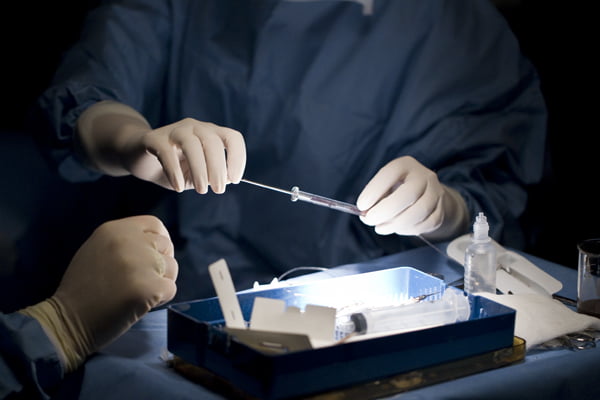
 January 2, 2018 | British and Israeli research institutions will team up to work on four joint projects concerning stem cells over the course of a three-year period, the British Council announced last month. They will be awarded £1.5 million ($2,033,175 million) for their efforts by the Britain Israel Research and Academic Exchange (BIRAX) program, a £10 million ($13.5 million) initiative of the British Council to invest in significant research from the cooperation of British and Israeli scientists. The projects will develop stem cell treatments for diabetes, heart disease, leukemia, anemia, and Alzheimer’s, according to the British Council. The new round partners together British scientists from Edinburgh University, Exeter University, University of Cambridge, and the University of Glasgow with Israeli scientists from Weizmann Institute of Science, the Technion – Israel Institute for Technology, and the Hebrew University of Jerusalem. One of the projects will have a Weizmann Institute of Science researcher collaborating with a University of Edinburgh researcher to explore how cells lining blood vessels in the body develop in order to learn how new blood vessels are regenerated in damaged tissue. Another Weizmann Institute of Science researcher will work with a University of Cambridge researcher to establish “how mutations in blood stem cells affect their function and will lead to a better understanding of why the blood and immune system deteriorate with age,” the report said. The other projects will be collaborations between Hebrew University researchers and University of Exeter researchers investigating type 1 diabetes. Researchers from Technion and the University of Glasgow will look into a “mechanism that may be implicated in Alzheimer’s disease.” BIRAX began six years ago as a collaboration between the British Council, British Embassy in Israel, and the UK Science & Innovation Network with founders Pears Foundation and the United Jewish Israel Appeal (UJIA.)
[sharethis-inline-buttons]

Israeli Startups Show Significant Increase in Raised Funds, Exits In 2017
 January 1, 2018 | Israeli startups raised an all time high of over $5 billion in 2017, Globes reported this week based on a report released by Israel Venture Capital (IVC) Research Center and law firm Zag. The numbers beat last year’s record of $4.8 billion in 2016, wihch at the time had been up 11 percent from the $4.3 billion raised in 2015. IVC-Zag reported that startups raised more than $3.8 billion in the first nine months of 2017 and more than $1.3 billion during the fourth quarter. The number could be even bigger, as some companies don’t publicize their investments. Globes says three startups raised 60 percent of the funds, which pointed to the trend that “fewer startups are raising more money.” Those startups were medical device company Insightec which raised $150 million, online insurance firm Lemonade which raised $120 million, and 3D imaging company Vayyar Imaging, which raised $45 million.
A PricewaterhouseCoopers (PwC) report shows that Israeli high-tech company exits totaled $7.44 billion in 2017, according to Israel21C. This is a significant increase from the $3.5 billion exits in 2016. Almost half the exits were computing or software, including cybersecurity tech. Life sciences companies were a quarter of the exits. A high-tech exit is a merger, acquisition, or initial public offering (IPO).
[sharethis-inline-buttons]

Apple Apologizes For Slowing iPhones, Israel’s iStore To Offer Discounted Batteries
 December 31, 2017 | The US mobile and tech giant Apple has issued an apology amid accusations that software updates were slowing down older iPhone devices. “We’ve been hearing feedback from our customers about the way we handle performance for iPhones with older batteries and how we have communicated that process. We know that some of you feel Apple has let you down. We apologize,” the company wrote in a press release. “First and foremost, we have never — and would never — do anything to intentionally shorten the life of any Apple product, or degrade the user experience to drive customer upgrades. Our goal has always been to create products that our customers love, and making iPhones last as long as possible is an important part of that,” it went on. The company said it was offering a reduced price for an out-of-warranty iPhone battery replacement from $79 to $29 through December 2018. In Israel, iStore, which sells Appel products but is not owned by Apple, announced that it will lower the battery replacement price to NIS 149 ($42) including VAT starting the end of January 2018. Apple also promises a software update in early 2018 that will target the battery and its condition. Last week, NoCamels reported that a $125 million class action suit was filed against Apple in a Tel Aviv court. The lawsuit claims that Apple “had a clear interest in hiding the information form users because it would prefer they replace old iPhones with new ones as soon as possible,” according to JTA. At least four similar lawsuits were filed in the US against the company as well. The lawsuits in the US accused the company of “deceptive, immoral, and unethical” practices, the Huffington Post reported.
[sharethis-inline-buttons]
Sirin Labs Raises Over $157M In ICO For Blockchain Phone, PC
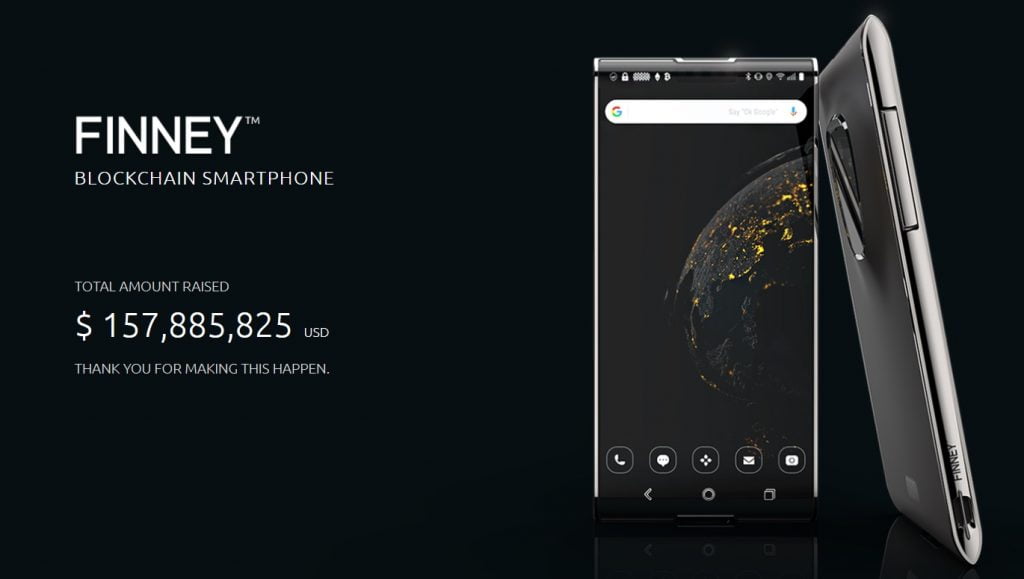
 December 31, 2017 | Sirin Labs, the Israeli-founded, Switzerland-based blockchain firm known for developing a $17,000 secure smartphone for high-end clients — and signing Leo Messi as a brand ambassador — said it wrapped up its crowdsale for the SRN token, Sirin’s cryptocurrency, raising over US $157,800,000. The initial coin offering was launched on December 12 for Sirin Labs’ new project — a blockchain-secured, open-source phone and PC called FINNEY. The devices, built on an in-house operating system, SirinOS, and supported by SRN, are set to feature crypto-wallets, a secure exchange access, encrypted communications, and a P2P resource sharing ecosystem for payment and apps, Sirin Labs said. The ICO ended on December 26 and Sirin Labs launched a pre-order of the FINNEY Smartphone for a downpayment of 50 SRN on December 28. The phone and PC have target pricess of $999 and $799, respectively on Sirin Labs’ website. CEO and co-founder of Sirin Labs, Moshe Hogeg said in a statement that the company was “both humbled and thrilled by the support that FINNEY™ has received during the course of our crowdsale. Becoming the 4th largest crowdsale of the year shows both the need in the market, and usefulness of having devices that can support and secure cryptocurrencies. It really is the first step in bringing blockchain technology to a more mainstream audience.”

Tower of David Museum Innovation Lab Now Accepting First Round Applications
 December 31, 2017 | The Tower of David Museum’s new innovation lab in Jerusalem, which was launched in October 2017 as a center to support companies in their development of unique tech solutions catering to the museum’s visitor experience, is now seeking applications for round one of its program, starting in January 2018. If accepted, the team will be able to develop their solution in the lab over a period of up to six months, the museum says. According to the museum, companies that apply to the program should be beyond the concept stage and also have a good knowledge of AR, VR, MR, and 360 technology. After a company submits their online application and is deemed eligible to participate they will be invited to make a live or online presentation of their solution before a professional panel. Companies that are chosen for the lab will have access to industry leaders and creative professionals that will work with the team to achieve desired results. Applications must include a proposed solution, team’s goals and impact addressing their solution, a detailed explanation of the team’s approach to AR, VR, or MR technology, evaluation goals, a progress plan, and how the solution can be used for worldwide collaboration. While the lab is open to all companies providing an AR or VR solution, the museum is also accepting two companies as “wild cards” meaning they “will permit new teams with groundbreaking ideas to enter the lab during one of the existing rounds.” The innovation lab will provide mentorship, a device lab, workspace, a real-time beta site, and groups of visitors / international delegations.
[sharethis-inline-buttons]

Israel Wants To Lease Negev Land To Chinese Market
 December 27, 2017 | A new plan headed by Agriculture Minister Uri Ariel and director general Shlomo Ben Eliyahu for collaboration with the Chinese market is being promoted by the Ministry of Agriculture and Rural Development, according to a report in Globes. A portion of the plan calls for 250,000 acres of land (one million dunams) in the Negev to be specifically held for the purpose of growing crops and produce for China. Ben Eliyahu, who visited China two weeks ago where he held talks with the Chinese Ministry of Agriculture, and where the idea was first brought up, calls the venture “the million dunam project.” The distributed Negev land is not an essential part of the land — Globes says it is already leased to some communities under special contracts. The land will now be used to grow particular “premium” crops, which interested Chinese customers will buy in advance. The interested Chinese investors will fund irrigation costs of the farms, with two desalination locations to be built specifically for irrigating those areas. Concerns about being raised about the project by the agricultural sector in Israel because the Negev is a region prone to drought, but the Ministry of Agriculture and Rural Development has still given it the go-ahead.
WuXi AppTec, Merck Serono To Set Up Biotech Incubator in Israel
 December 26, 2017 | Chinese pharmaceutical firm WuXi AppTec Group will team up with Merck Serono, a subsidiary of Merck KGaA, to set up a biotech/pharma incubator in Israel in early 2018, Calcalist reported this week. The startup incubator, called Explore Bio, will be situated in the Israeli town of Yavne, where Merck Sorono already has a location. The incubator will evaluate investments, assist with drug development, assess market demand, and offer early-stage mentoring, according to the report. Each Israeli firm will receive seven million dollars in an initial investment from the company. Israeli businessman Mori Arkin and life sciences VC fund Pontifax are also part of the venture.

Israeli Regulator Seeks Ban On Bitcoin Firms From TASE
 December 26, 2017 | The chairman of the Israel Securities Authority (ISA), Shmuel Hauser, said on Monday that he will move to ban companies based on crytocurrencies, like Bitcoin, from trading on the Tel Aviv Stock Exchange. Speaking at the annual conference held by business daily Calcalist, Hauser said he would bring the proposal to the ISA next week. “If we have a company that their main business is digital currencies we would not allow it. If already listed, its trading will be suspended,” Hauser was quoted by Reuters as saying at the conference. Israel must find the appropriate regulations for such companies, added Hauser, who is stepping now as ISA chairman next month. “We feel that the prices of bitcoin behave like bubbles and we don’t want investors to be subject to that volatility and uncertainty,” Hauser said.

Apple Hit With $125M Lawsuit In Israel Over Slow iPhones
 December 26, 2017 | A class action suit against American tech giant Apple was filed in a Tel Aviv court on Monday, amid accusations the company failed to disclose that its routine software updates on older iPhone devices would slow down performance. At least four similar lawsuits were filed in the United States against the company after it announced that the indeed the updates were slowing down older iPhone devices but that these measures were taken to save on battery life. Users faced with the slow-downs usually concluded that they needed to buy new devices, the American lawsuits allege, accusing the company of “deceptive, immoral and unethical” practices. The $125 million lawsuit in Israel similarly claims that Apple had “a clear interest in hiding the information from users because it would prefer they replace old iPhones with new ones as soon as possible,” JTA reported. Affected devices include the iPhone 6, iPhone 6s and iPhone SE and iPhone 7. Last month, an Israeli startup filed a lawsuit for an undisclosed amount against Apple, alleging that the US tech giant copied its patented camera technology and incorporated it into the iPhone.
