
 March 18, 2018 | Israeli finance and tech hub Tel Aviv outranked New York, Los Angeles and London as the ninth most expensive city in the world, according to the newest report by The Economist Intelligence Unit titled “Worldwide Cost of Living 2018.” Tel Aviv climbed to its ninth spot from 34 just five years ago. The report says that the shekel’s strong performance played a part in Tel Aviv’s climb to the top 10, but the city “also has some specific costs that drive up prices, notably those of buying, insuring and maintaining a car,” pushing transport costs 79 percent above New York prices. Tel Aviv is also the second most expensive city in which to buy alcohol, according to the survey. New York, which occupied the ninth spot in the 2017 survey by the Economist Intelligence Unit, fell to number 13, due in part to a weakening dollar and Los Angeles ranked 14. London came in sixth in the 2016 report but fell from the top ten in 2017 and 2018. Singapore has maintained its top spot as the most expensive city in the world for the fifth consecutive year. Paris came in at number two in 2018, followed by Zurich, Hong Kong, Oslo, Geneva, Seoul and Copenhagen. Sydney closed out the top 10.
News Briefs

Tel Aviv Outranks NY, London As 9th Most Expensive City In The World
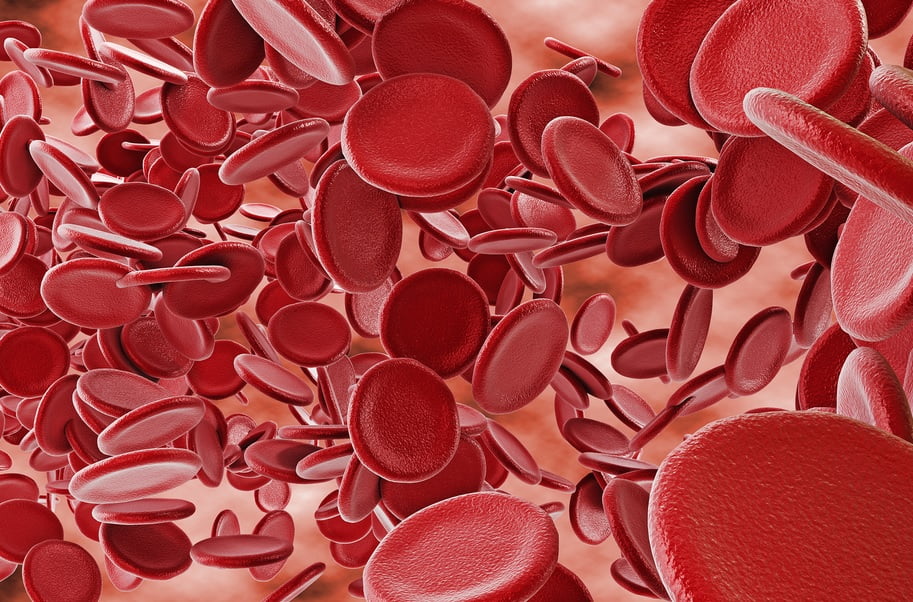
Israel’s PixCell Snags $3M European Commission Grant To Advance Blood Testing Tech
 March 15, 2018 | Yokneam-based Israeli startup PixCell, which develops, manufactures, and markets portable medical diagnostic products for simple blood sampling and analysis, announced that it was awarded a 2.5 million Euro (approximately $3 million) grant to “accelerate commercialization of its product the HemoScreen.” The funding will serve to further test the product, the company said. The Hemoscreen is a portable blood analyzer that performs common test including a blood count with results within 5 minutes, PixCell says. The product is CE marked and expected to be FDA cleared during 2018.
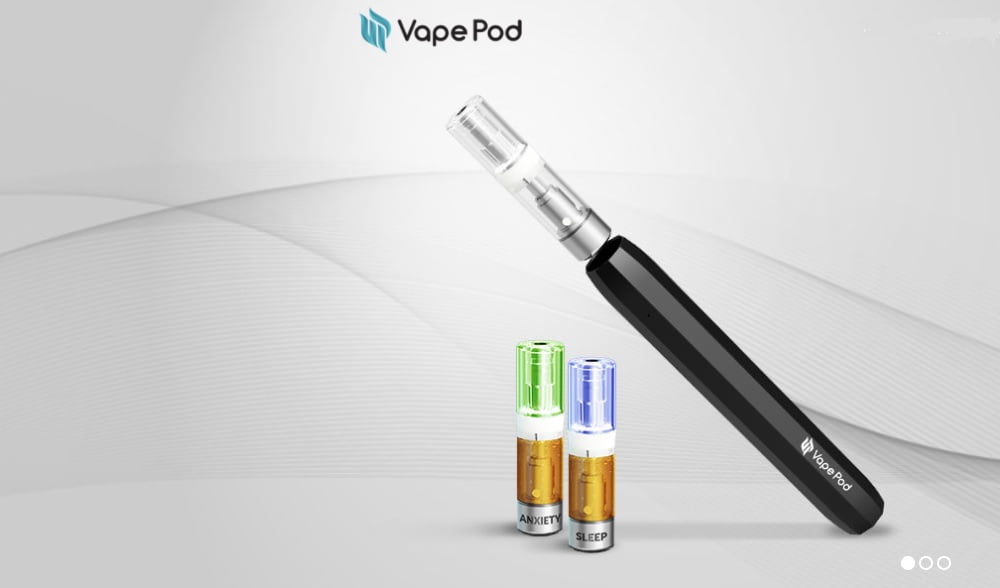
Israel First Country In The World To Approve Medical Cannabis Vaporizer
 March 15, 2018 | Israeli medical cannabis R&D company Kanabo Research announced yesterday that the Israeli Ministry of Health has granted its VapePod vaporizer product approval as a medical device, according to a statement. This move makes Israel the first country in the world to approve a vaporizer as a medical device for the use of medical cannabis extracts and formulations. Kanabo has already begun pre-clinical trials of the company’s current mixtures to be used with the VapePod medical cannabis vaporizer for the treatment of sleep disorders. The results are impressive in early findings, and the combination will give medical cannabis patients the opportunity to receive more effective and accurate dosage and delivery methods of medical cannabis treatment. Kanabo is in the process of registering two patents dealing with their formulations of medical cannabis extracts for sleep disorders to be used with the approved VapePod vaporizer. The VapePod medical vaporizer allows the patients to inhale their medical cannabis, without the risks of smoking, which is currently the most common way for patients to consume medical cannabis. “This approval is a significant announcement for the medical cannabis patients in Israel who will be able to use the medical vaporizer for the first time,” said Avihu Tamir, co-founder and CEO of Kanabo Research, who also added that as medical cannabis patients move to vaporizer usage, his company is expected to reach $10 million in sales in the Israeli market.
[sharethis-inline-buttons]

Israel’s Effective Space Startup Will Launch Two ‘Space Drone’ Spacecraft In 2020
 March 14, 2018 | Israeli aerospace startup Effective Space Solutions and US-based global commercial launch services provider International Launch Services (ILS) announced Tuesday that they will launch two Effective Space “Space Drone” spacecraft into orbit in 2020, according to a statement from both companies. The spacecraft will be launched with the ILS Proton Breeze M Vehicle from the Baikonur Cosmodrome in Kazakhstan. “Launching our first two ‘Space Drone’ spacecraft into a geostationary orbit is part of our strong commitment to our first customer, meeting mission timeline and ensuring smooth transition into a life-extension service,” said Arie Halsband, founder and CEO of Effective Space. Each ‘Space Drone’ spacecraft is a 400-kilogram spacecraft that “has a universal, non-intrusive docking system to rendezvous and dock to the geostationary host satellite,” the statement says. The Israeli-founded company, now headquartered in the UK, was founded by Arie Halsband, the former general manager of the space division of Israel Aerospace Industries, in 2013. The company also has an R&D center in Tel Aviv. The startup signed a $100 million deal with a large communications satellite operator in January 2018, to prolong the life of two aging satellites. As part of the deal, Effective Space agreed to launch its two “Space Drone” spacecraft in 2020.
[sharethis-inline-buttons]

Behavioral Biometrics Startup BioCatch Raises $30M In Funding Round
 March 13, 2018 | Israeli cybersecurity startup BioCatch, an award-winning company that tracks behavioral biometrics for fraud detection, announced that it raised $30 million in a financing round led by Maverick Ventures, with the participation of American Express Ventures, NexStar Partners, OurCrowd, and others. The round brings BioCatch’s total amount raised since its founding in 2011 to over $41 million. The company uses more than 2,000 parameters to track user behavior and has at least 56 registered or pending patents. BioCatch said in a statement that the funds will go toward pursuing markets beyond banks, including insurance, cryptocurrency, P2P payments, healthcare, and government organizations. The company says its vision is to “redefine digital identity and enable renewed trust in online interactions.” Newly appointed CEO Howard Edelstein said in a statement, “BioCatch helps to answer the question, ‘who are you’ in an online world where fraudsters operate with the legitimate credentials of others, making it very hard to distinguish them from authorized users.” Edelstein said the company takes pride “in the track record we have amassed and the role that we play as an integral part of our clients’ identity strategy. This strategy cuts across the digital ecosystem, from stopping fraud in real-time to preventing fake accounts from being opened in the first place, all while enabling a seamless user experience.”

Spotify Officially Launches In Israel
 March 12, 2018 | Spotify, the world’s most popular music streaming service, has officially launched in Israel today, according to a statement from the company. The platform allows you to browse and discover music, curate playlists, and build a music collection. The service, which offers a catalog of over 35 million Israeli and international songs, gives its users a choice of a free ad-supported service or an ad-free Premium subscription service for 19.90ILS ($5.70) a month. Spotify has partnered with the Israeli-founded GPS navigation company Waze to incorporate playlists into the app on both Android and iOS. It has also partnered with Israel’s Galgalatz radio to bring Israeli users playlists curated by hosts and editors from the station. Spotify has a personalization feature allowing fans to find music they love and discover new artists based on taste and listening patterns. This includes a Daily Mix series, Release Radar (new music based on artists followed and listened to most by the user) and Discover Weekly (a playlist based on the users’ unique listening habits. The Swedish-developed service was first developed in 2008, but currently has two billion playlists available for 159 million fans worldwide and following the Israeli launch, will be available in 62 markets worldwide.
[sharethis-inline-buttons]

Digital Health Center Launched In Downtown Haifa
 March 12, 2018 | The city of Haifa has established a new, international digital health center in its downtown area, Haifa Mayor Yona Yahav announced in an inauguration ceremony, along with Jerusalem Venture Partners Chairman Erel Margalit and CEO of Berkshire Partners Brad Bloom. The center is scheduled to open January 2019.
It will serve as an innovation center, an academic accelerator for students, a platform for multinational companies, an investment-focused venture capital fund for Haifa, and an establishment for digital health-related activities, including a meeting place for entrepreneurs and investors in the field and a center for cooperation between academic institutions in Haifa and and research and medical centers throughout Israel, according to a statement from Israel Initiative 2020 (ii2020), Margalit’s vision to create a dynamic center of excellence in seven regions throughout Israel, including Haifa
The center will work in cooperation with Haifa’s Technion — Israel Institute of Technology, the University of Haifa, and Rambam Hospital.
“This is an exciting and important day for the economic development of the city, and what we have done in Beersheba with cyber is here in the field of digital medicine, One of the world’s leading medicine companies, the presence of multi-national companies and a flourishing entrepreneurial scene – combining these four elements together, around the digital health field can create thousands of jobs here. The digital medical district will become the focus of the city’s innovation.” Margalit at the ceremony.
The center will be set up in a historical building first built in the 1930s in a Bauhaus style by renowned architect Richard Kaufmann. It will cover at least 1,100 square meters (over 11,840 feet).
Margalit recently hosted Ecosystem Haifa 2018, a conference that focuses on Haifa as a center of innovation and entrepreneurship as well as a global leader in digital health.
[sharethis-inline-buttons]
OurCrowd Opens Office In London
 March 12, 2018 | OurCrowd, the equity crowdfunding platform, announced Monday the opening of a new UK office located in Mayfair, London, according to a statement. This is the 10th location for OurCrowd, which was founded in Jerusalem and also has offices in the United States, Canada, Australia, and Singapore. The new office will be headed by its new Director of Investor Relations Lina White, who formerly worked at the multinational finance firm Goldman Sachs. White will manage OurCrowd activities, including the growing community of British investors. OurCrowd expects to add thousands of new UK investors and help Israeli startups enter the UK market. Founded in 2013 by Jon Medved, OurCrowd currently has almost 25,000 accredited investors from over 112 countries. It has raised over $650 million and invested in 145 portfolio companies and funds. The company predicts it will surpass $1 billion in assets under management, raised through equity crowdfunding from investors.
[sharethis-inline-buttons]

Defense Contractor Elbit To Buy Arms Maker IMI For $523M
 March 11, 2018 | Israel’s finance ministry announced on Sunday that the state-owned weapons manufacturer Israel Military Industries (IMI) would be sold to defense contractor Elbit Systems, for 1.8 billion shekels ($523 million). IMI is best known as the maker of the Uzi submachine gun and the Galil. Elbit will pay another 100 million ($29 million) depending if IMI overseas sales goals for the year. Under the terms of the agreement, IMI will close its Ramat Hasharon factories and relocate them to the Negev, in the Ramat Beka industrial zone south of Beersheba, The Times of Israel reported. The move is set to free up in-demand land for housing. Finance Minister Moshe Kahlon said in a statement. “The agreement that was reached continues the Finance Ministry’s policy of clearing [industry] from high-demand areas for the public benefit. The move of the factories to the Negev will allow constructions of thousands of housing units in the heart of a high-demand area, while strengthening industry and employment in the Negev.”

WeWork Acquires Marketing, SEO Platform Conductor To ‘Humanize Marketing’
 March 11, 2018 | Shared workspace giant WeWork announced that it was acquiring marketing and SEO company Conductor for an undisclosed amount. Conductor, a content intelligence platform, was co-founded in 2008 by Seth Besmertnik, who serves as the company’s CEO and has known WeWork co-founder Adam Neumann, an Israeli-born entrepreneur, since they attended Baruch College together in New York. Besmertnik told TechCrunch that the two “kept reconnecting and reconnecting over the years.” The two companies are already customers of each other’s services and have been working together since 2016. WeWork said in a statement that Conductor is “capitalizing on a revolutionary change in marketing, one in which marketers attract customers through relevant, high-quality content online instead of depending on traditional ad-serving models to drive online acquisition,” and that “if a new approach, platform, or service has helped our fast-growing global business flourish, we want to share those learnings with our members and beyond.” Together, said Besmertnik in a Conductor statement, “we’re going to be building a marketing cloud to go after the enterprise market.” He added, “where WeWork provides businesses with the right physical presence, Conductor will enable companies to have the right digital presence.” Conductor will continue to operate as an independent business and Besmertnik will continue serving as CEO. The company says it serves over 1,000 brands around the world, including Citibank, Salesforce, and CVS, and has raised over $60 million in total funding since it was founded, according to Crunchbase.

Tel Aviv Startup Arbe Robotics Wins Berlin’s Tech.AD Award
 March 11, 2018 | Arbe Robotics, a company developing a high-resolution radar system to help vehicles detect and identify objects, is the winner of Berlin’s Automotive Tech.AD Award 2018, according to a statement from the Tel Aviv-based startup. Presented by we.CONECT, the award recognizes and honors exceptional projects. The company won for outstanding achievements in the autonomous driving industry, including being “the first to demonstrate ultra-high-resolution imaging radar.” Arbe Robotics founder and CEO Kobi Marenko said, “To be recognized as the winner by one of the leading automotive events is a true honor, and following the win, we will continue to develop and produce our revolutionary real-time 4D imaging radar.” Founded in 2015, Arbe Robotics’ 4D imaging technology provides ADAS, level 4, and 5 fully autonomous cars with high-resolution imaging radar that enables them to “see” the environment in any weather and lighting condition; from long, mid and short ranges in wide azimuth, elevation, range, and Doppler. The company raised an additional $9 million at the end of 2017 in a funding round led by equity crowdfunding platform OurCrowd and O.G. Tech Ventures. They will also use the money to invest in their first customer support center in Silicon Valley.
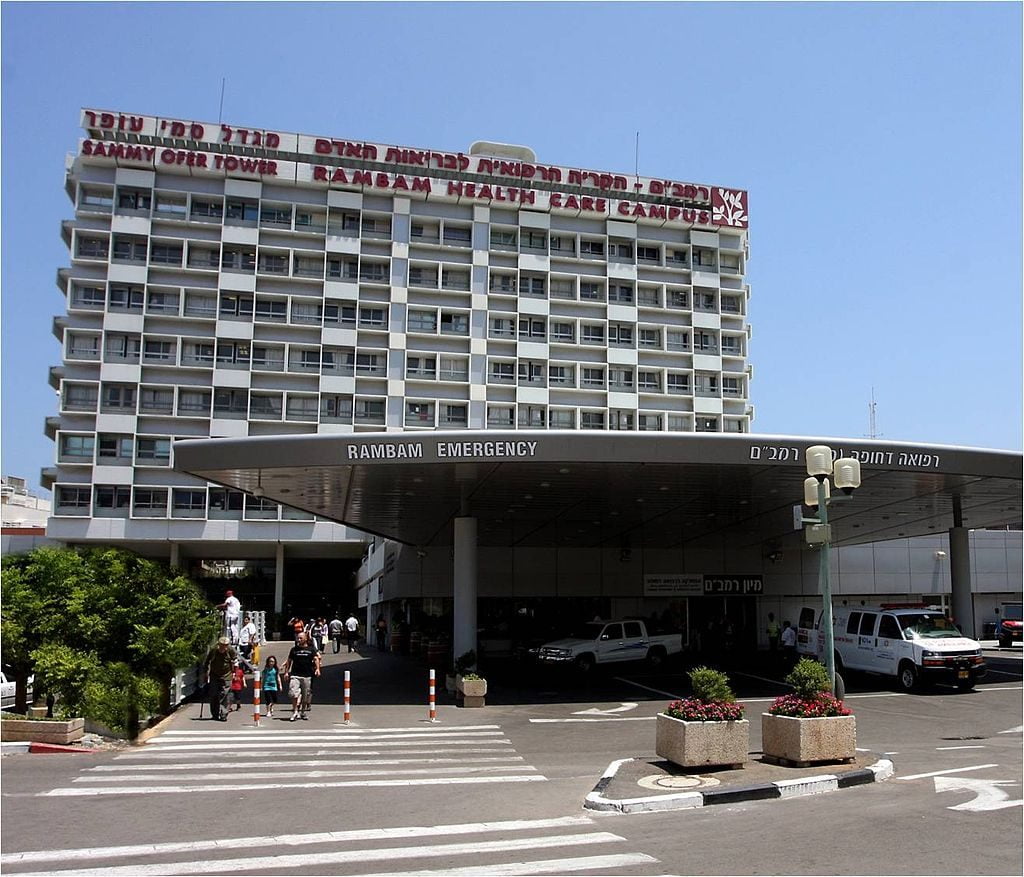
Stanford, Israel’s Rambam Hospital To Cooperate On Medical Innovation, AI Research
 March 11, 2018 | Stanford Medicine and Israel’s Rambam Health Care Campus announced over the weekend that they are establishing a cooperation agreement to work together on the future of medicine. They announced four areas of cooperations including “medical innovation, research in collaboration with Big Data and Machine Learning, cutting-edge drug development and trauma and emergency preparedness.” The agreement was reached following a Stanford Medicine-Rambam Symposium on “Planning for the Next Generation” last week. The two institutions discussed opportunities for partnerships during the two-day event. The institutions noted the budget gap – “Rambam, a hospital with 1,000 beds and 130,000 visits to the emergency room annually with a budget of $400 million versus Stanford, a 600-bed hospital with 60,000 visits to its emergency room annually and a budget of $7 billion a year” – with Rambam Director Prof. Rafi Beyar saying that “despite the enormous gap, Israel ranks much higher than the US in the quality of medicine.” Speakers from both institutions discussed the difficult challenges of their respective health systems in maintaining equitable health care, closing gaps, coping with the challenges of tomorrow’s health needs, as well as the heavy burdens on health care systems, Rambam said in a statement. “During the conference, we discussed precise, personalized health issues and the issue of health in Israel, including the complex relations in Israel between its local diverse population and with its neighbors,” Prof. Beyar said.

Bill To Legalize Cannabis Use Passes First Knesset Reading
 March 8, 2018 | The Israeli Knesset this week unanimously passed (38-0) a first reading of a bill to legalize the use of marijuana. The bill, which focuses on enforcement, levying fines on those caught with marijuana, will go into effect in the next few months, according to Public Security Minister Gilad Erdan, who spearheaded the bill. First offenders will have to pay a NIS 1000 fine ($288), NIS 2000 ($577) if caught a second time, rehab and license revocation if it’s the third time and by the fourth time, criminal proceedings. Erdan was quoted by the Jerusalem Post as saying that the bill is meant to “reduce the harms of drug usage regularly but avoid as much as possible the criminal stigmatization of average citizens.” MK Tamar Zandberg (Meretz), who chairs the Knesset Special Committee on Drug and Alcohol Abuse, said the bill was “far from perfect, but it is a foot in the door on the way to a policy of full legalization,” according to the Jerusalem Post. Marijuana is still considered a controlled substance, but Israel has been a pioneer in medical cannabis, with plans to push through reforms that would allow for the exports of marijuana plants to the tune of an estimated $1 billion in annual revenue. Last month, Prime Minister Benjamin Netanyahu decided to suspend the reforms amid opposition by the Public Security Ministry which said it is afraid of “spillover” into the recreational market and which is demanding more funds (as well as a reported conversation with US President Donald Trump, whose administration is taking a hard-line against cannabis including its medical use.) The Israeli Health Ministry and the National Economic Council are currently reviewing the proposed reforms.
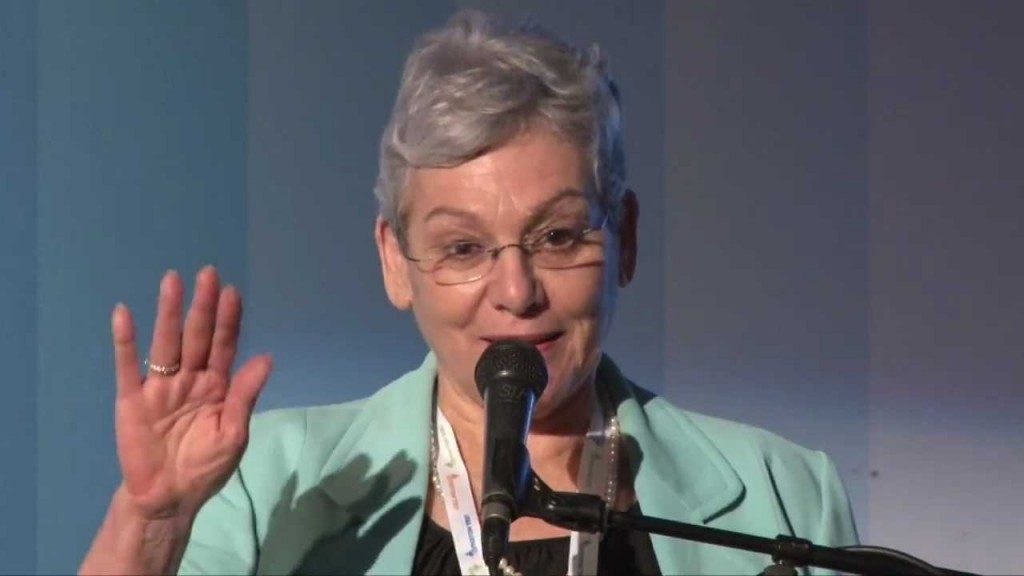
Co-Founders Of Renewable Energy Tech Provider Win Israel Prize In Industry
 March 8, 2018 | Yehuda and Yehudit Bronicki, founders of Ormat Technologies, were announced as the recipients of the 2018 Israel Prize in industry. The husband and wife pair are the co-founders of the Israeli alternative and renewable energy technology provider. The prize committee congratulated the pair, writing, ““Yehuda Bronicki, a visionary, an inventor, born in Poland who survived the Holocaust and together with his wife, Dita Bronicki, one of the first businesswomen and female entrepreneurs in Israel – a pioneer in her field – jointly established the Ormat Group and made it a world leader in geothermal energy,” the Jerusalem Post reports. Founded in 1965 by the Bronickis, Ormat Technologies went public in 2004 and the Bronickis retired in 2014. The company provides renewable energy sources in the United States and around the world. The Israel Prize committee has faced some criticism for their choice of winners this year, as Yehudit Bronicki is the first and only female winner of the 2018 Israel Prize among the 11 winners that have been announced to date. The lack of female laureates have received disapproval from former MKs like Meirav Michaeli and Shelly Yechimovitch of the Zionist Union party. Two winners have yet to be announced.

Israeli Medical Tech Startup Vectorious Raises $9.5M
 March 7, 2018 | Israel’s Vectorious Medical Technologies, which developed a miniature implant for left-atrial monitoring to detect heart failure, announced that it raised $9.5 million in a Series B funding round led by Boston-based Broadview Ventures and China’s GEOC, with the participation of Israel-based investors, Globes reported. In November, Vectorious was one of 15 Israeli startups selected to present their tech to the Chinese market at the annual Israeli roadshow in China, an event organized by the Israel Innovation Authority in cooperation with the Chinese Ministry of Science and Technology. The company said the funds will allow it to expand its workforce and conduct clinical trials. Vectorious Medical Technologies founded in 2011 by CEO Oren Goldstein.
