
 June 6, 2018 | Chinese investors met Israeli startup entrepreneurs at the GoForIsrael 2018 conference in Foshan, China where over 1200 attendees, including 500 Chinese investors and 100 startup entrepreneurs, observed panel discussions and participated in over 800 one-on-one meetings last month, according to the the Cukierman & Co Investment House, who initiated the confab along with The Catalyst CEL Fund, one of the most important financial areas in China. The Chinese investors at the event included senior executives from companies such as Alibaba, GF Securities, and Ping An, the largest insurance and finance company in China. The conference presented the best of Israeli innovation in areas such as artificial intelligence, IT, life sciences, cyber, energy, advanced production, telecom, automotive technologies and more. Israeli companies exhibiting at the event and presenting their technologies to Chinese investors include Trax, Orbotech, HearMeOut, Curalife, Lamina, and others. The GoForIsrael conference has been one of the most influential business conferences in Israel for over 20 years, addressing current issues in fundraising and establishing strategic alliances globally between Israeli companies, businesses, and financial institutions. This is the first time the event is held in Foshan and the second time outside of Israel. The 16th annual conference took place in Shanghai and Wuhan, China where the event welcomed 2,800 participants.
News Briefs
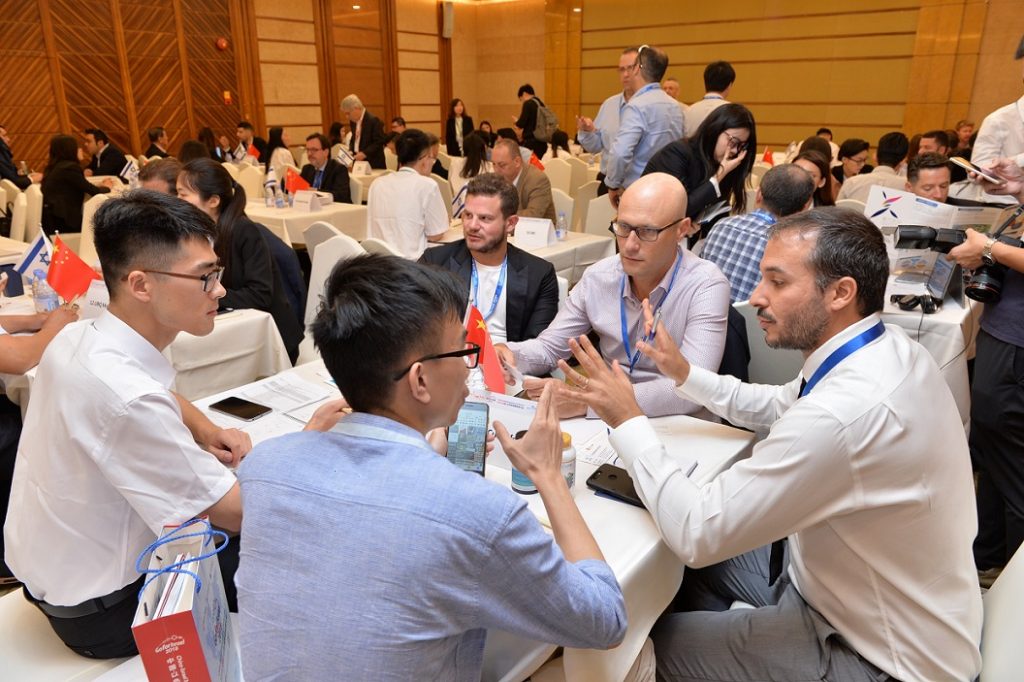
Foshan’s GoForIsrael Conference Connects Israeli Startups With Chinese Investors

Chinese Auto Giant HiRain Taps Into Innoviz’s Breakthrough LiDAR Sensor Tech
 June 6, 2018 | Israeli LiDAR sensing solutions provider Innoviz announced Wednesday it will be partnering with Chinese automotive Tier 1 solution provider HiRain Technologies, to bring Innoviz’s groundbreaking LiDAR (light detection and ranging) and computer vision technology to Chinese automakers through HiRain’s sales channels in the country. The partnership will make the LiDAR solution available through HiRain’s autonomous driving system. The firm’s LiDAR offers Chinese original equipment manufacturers (OEMs) the opportunity to access “the automotive industry’s most comprehensive mass-market LiDAR solution available today, as an integrated component of their overall driving systems,” the company said. The solution also provides a complete computer vision software stack and algorithms that can turn 3D vision into critical driving data. “The HiRain team has extensive experience with driver assistance and autonomous driving systems in China and we are honoured to partner with them. Together, we will help Chinese auto manufacturers achieve the standards they demand for safe and reliable LiDAR sensors, at the price point they desire,” said Innoviz CEO Omer Keilaf. The Israeli company’s foray into the Chinese market adds another milestone to their continuous worldwid expansion over the past year, which includes Innoviz’s automotive-grade LiDAR InnovizOne and computer vision software being selected by German auto giant BMW Group for its autonomous vehicle production in 2021.

Tel Aviv Firm Hailo Raises $12.5M To Develop Its Deep Learning Processor
 June 5, 2018 | Hailo, an Israeli company developing deep learning chips for embedded devices announced Tuesday it has raised $12.5 million in a Series A funding round. The companies that invested in the firm include OurCrowd.com, Maniv Mobility, the Drive accelerator fund: Next Gear and angel investors, Hailo Chairman Zohar Zisapel and Delek Motors CEO Gil Agmon. The company says it will use the funds to further its deep learning processor, which will “deliver data center processing capacity to edge devices.” This latest round brings the company’s total funding to $16 million. Hailo’s deep learning processor, which reduces size, power, and cost when processing high-resolution sensory data, will be able to run embedded AI applications on edge devices installed in autonomous vehicles, drones, and smart home appliances, like personal assistants and smart cameras, the company said. The processor’s initial samples are expected to hit the market in 2019. Hailo hopes to hit target markets like the autonomous industry. “The 70-year old architecture of existing processors is inadequate to meet today’s deep learning and AI processing needs. Hailo is revolutionizing the underlying architecture of the processor to boost deep learning processing by several orders of magnitude. We have completely redesigned the pillars of computer architecture – memory, control and compute – and the relations between them,” said CEO Orr Danon.
Photo (left to right): Hailo founders: CEO Orr Danon, Chief Business Development Officer Hadar Zeitlin, and CTO Avi Baum. Photographer : Eran Tayree
[sharethis-inline-buttons]
Israeli Cybersecurity Firm Cyberbit Raises $30M
 June 5, 2018 | Israeli cybersecurity company Cyberbit, a subsidiary of defense contractor Elbit Systems, announced Monday it has raised $30 million in a funding round. The financing comes from private equity investment firm Claridge Israel, which represents Canadian investor Stephen Bronfman. The company says it will use the new funds to expand sales and marketing operations, mainly in North America, as well as improve development and enhance customer and partner support. Cyberbit has developed Cyberbit Range, a cyber training and simulation solution through a threat detection and response platform that protects a company’s attack surface across IT, OT, and IoT networks. Cyberbit was founded in March 2015 as a subsidiary of Elbit. Elbit also launched a Cyberbit sister company, which absorbed the cyber intelligence division of Israel-based business solutions firm NICE System, acquired by Elbit for more than $157 million in 2015.

Seven Israeli Companies Selected To Head State-Funded Coding Boot Camps
 June 4, 2018 | The Israel Innovation Authority, the support arm of the Israeli government responsible for the country’s innovation policy, announced Monday the seven winners of a competition to establish coding boot camps to train software developers for Israel’s hi-tech industry. The companies were selected as part of a government program set to answer a shortage of engineers, programmers, and developers currently being felt in the local tech ecosystem. The initiative, which aims to use these boot camps to train 2,000 software developers expected to join the workforce within the next five years, will have an annual budget of $2.8 million. The training courses receive funding based on the salaries the graduates eventually receive, but they will also be able to receive grants for successful placement of diverse populations: women, people over 45, members of the Arab and ultra-Orthodox communities, Ethiopian immigrants and persons with disabilities.
Seven companies were chosen from a total of 24 submitted proposals to offer software training as part of a three-year program, mainly to academics with scientific backgrounds. The companies include Appleseeds Academy, an Israeli non-profit specializing in educational-tech programs in communities throughout geographical and socio-economic peripheries, which has teamed up with ITC (see below) and other companies to offer a course in Full Stack and mobile professions in Ramle and Tel Aviv; Infinity Labs, offering software training, consulting, and R&D services, conducting training in Full Stack and C/C++ Embedded in Ramat Gan and Haifa; ITC – Israel Tech Challenge, an intense training program for academics in science professions wishing to switch career paths chosen to operate a boot camp in data science; Experis Kickstart, a training program for outstanding academics in hi-tech operating a boot camps in RT Embedded and data science in Tel Aviv and Haifa; Elevation Academy, providing a boot camp in Full Stack; Kav Mashve, a non-profit aimed at promoting the integration of academics from the Arab community into the Israeli economy and running training courses in Nazareth, Shfaram, and Daliat al-Carmel; and Primrose, a company establishing coding boot camps for people with graduate degrees in exact sciences who want to move to machine learning and who will operate their boot camps in machine learning in Tel Aviv.
These organizations were selected by a professional committee with representatives of industry and government. They will be “responsible for recruiting promising candidates, providing them with high-quality training, and integrating the graduates into high wage development roles throughout the hi-tech industry. The Israel Innovation Authority’s system of remuneration is based on “pay-per-performance,” that is, the coding boot camps will receive the majority of their fees only when graduates are placed in software development roles at salaries higher than 14,000 shekels per month,” the Israel Innovation Authority said.
According to the Israel Innovation Authority, coding boot camps first appeared in the United States in 2012 and have become a popular way to train future programmers. These boot camps currently provide about one quarter of the people employed in programming positions every year.
[sharethis-inline-buttons]
Jerusalem Venture Partners To Establish New Tech Incubator In Jerusalem
 June 4, 2018 | Jerusalem Venture Partners (JVP), the international venture capital firm, which already operates the JVP Cyber Labs incubator in Beersheba alongside Ben-Gurion University, has announced it will also establish a branch in Jerusalem to help strengthen local entrepreneurship and contribute to the development of the city’s ecosystem. The new branch will invest in and support companies in the area of cybersecurity, artificial intelligence and organizational software. According to Anya Eldan, Vice President and Head of the Startup Division of the Israel Innovation Authority, which runs Israel’s technology incubator program, “Approval of the establishment of a branch actually enables the splitting of the incubator into a central site and its extension,” she said, “In order for the extension’s activities not to take place at the expense of the incubator in Beersheba, the incubator decided that the branch’s activities will be managed by a separate team from Beersheba’s management team.” In addition, she said the committee decided to require the incubator to absorb at least six additional companies in Beersheba until the end of April 2021.

Ben-Gurion University, US Air Force Sign Aviation Research Deal
 June 4, 2018 | Ben-Gurion University of the Negev has signed a three-year research agreement with the US Air Force Research Laboratory (AFRL) to collaborate to improve aviation engine health monitoring by developing better algorithms for it, the two companies announced in a statement. Professor Jacob Bortman, head of the university’s PHM (prognostic health monitoring) lab in the Department of Mechanical Engineering and formerly Head of Material Command in the Israel Air Force, has “developed advanced diagnostic and prognostic algorithms to monitor engine health and predict materials deterioration” and reduce accidents and maintenance costs, the press release said. Dr. Renata Klein, a mechanical health monitoring expert, will also take part in the research collaboration. The agreement was signed under the auspices of the Defense Ministry’s Administration for the Development of Weapons and Technological Infrastructure.

9 Israeli Firms To Take Part In Leading Biotech Event In Boston
 June 4, 2018 | Nine Israeli biotech companies will participate in the 25th annual BIO International Convention in Boston this week, the Israel Innovation Authority announced on Monday. The conference, which is considered the world’s largest and most prestigious biotechnology event, will host 16,000 professionals from more than 70 countries, showcasing the most promising companies and developments in MedTech and life sciences.
“Israel will be represented at the conference by an impressive national pavilion which will include nine leading companies carefully selected by the Israel Innovation Authority, with support from the Israel Advanced Technology Industries (IATI.) These companies represent Israeli innovation in various fields of life sciences,” Israel Minister of Economy and Industry Eli Cohen said in a statement.
Israel firms taking part in the conference include EIMindA, a Herzliya-based brain tech company using machine learning and IoT to analyze brain function patterns; BiomX, a microbiome drug discovery company developing custom phase therapies that treat chronic illnesses and cancer; Taliaz, a Tel Aviv-based pharmacogenomic company that has developed an AI-based smart platform to help physicians match anti-depressants to their patients; Cell Cure Neurosciences, a biotech company developing tech focused on cell therapies for retinal and neural degenerative disease; FutuRX, an Israeli biotech accelerator; Mitoconix Bio, a biopharmaceutical company focused on therapies for neurological diseases; Nucleix, a firm that develops, manufactures, and markets innovative non-invasive molecular cancer diagnostic tests; Pluristem Therapeutics, a company focused on the development of human placental adherent stromal cells for commercial use in disease treatment; and VBL Therapeutics, two platform technologies that enhance natural physiologic and genetic regulatory elements.
The 2018 BIO International Convention is celebrating 25 years of innovation. It is hosted by the Biotechnology Innovation Organization (BIO), which represents more than 1,100 biotech companies, academic institutions, state biotechnology centers and related organizations across the United States and in more than 30 other nations.
[sharethis-inline-buttons]
Israeli Startups To Pilot New Tech Through Government-Owned Firms
June 3, 2018 | The Israeli Ministry of Finance’s Government Companies Authority, a unit that oversees firms where the Israeli government has ownership stake, and the Israel Innovation Authority announced the launch of a new program that will allow Israeli startups to pilot their technology using the infrastucture in state-owned companies.
The new NIS 10 billion NIS (about $2.8 million) program will aim to help develop innovative technologies while also helping increase efficiency for the government-owned firms. Israeli government-owned companies include the Israel Postal Company, the Israel Electric Corporation, and Bituach Leumi, Israel’s national social security agency.
Israeli Minister of Economy and Industry Eli Cohen said the establishment of the program will promote the development and growth of innovation systems and promote cooperation with government-owned companies and infrastructure. Pilot projects will have between 20 and 50 percent of R&D expenses covered by the program. The project provides “an additional incentive to companies to join the digital age,” said Finance Minister Moshe Kahlon. The innovative systems set up in these companies, he said, “will boost and improve their operations, make them more accessible to the public and upgrade their level of service.”
Israel Innovation Authority CEO Aharon Aharon said the program has a dual purpose: tech companies will have unprecedented access to government-run companies and a large infrastructure, and the companies themselves will
be given the opportunity to upgrade their systems and their performance. “We open the door to technology companies to conduct experiments that were not possible in the past, and create an opportunity to outline the future regulation of innovative and leading the entire economy,” he said.

Hebrew University Ranked Among World’s Top 100 In Times Higher Education Survey
 June 3, 2018 | Jerusalem’s Hebrew University has squeezed into the top 100 global university brands in a recent Times Higher Education World Reputation Rankings survey for 2018. This marks the first time since 2014 that an Israeli university has made the prestigious list when the Technion – Israel Institute of Technology was included. Hebrew University ranked in the 91-100 band, together with Boston University, the University of Copenhagen France’s École Polytechnique, the Indian Institute of Science, and the Moscow Institute of Physics and Technology, among others. Harvard University took the number one spot for the eighth consecutive year, followed by the Massachusetts Institute of Technology (MIT) in second place, and Stanford University in third. The UK’s University of Cambridge and University of Oxford closed off the top five. Hebrew University President Asher Cohen said, “To be judged among the Top 100 most powerful university brands is a great source of pride for everyone at Hebrew University and for Israel as a whole. Success in our field is never an accident, it is achieved by a relentless pursuit of excellence, creativity and a deep commitment to our enduring values.” The World Reputation Rankings is based on “an invitation-only opinion survey of senior, published academics” asked to name no more than 15 universities that they believed were the best for research and teaching in their field, Times Higher Education said.

Tel Aviv Startup CodiPark Acquired By US Firm ParkWhiz
 May 31, 2018 | US e-parking service ParkWhiz, headquartered in Chicago, Illinois, announced that it acquired Tel Aviv-based startup CodiPark for an undisclosed sum. CodiPark, which also has offices in New York, is a mobile payment platform that enables “friction-less” parking with users skipping payment machines and kiosks for scanning barcodes. ParkWhiz said in a statement that “with the acquisition, ParkWhiz will add drive-up mobile payments to its Parking Platform, which powers numerous third party mobile apps, as well as its own ParkWhiz and BestParking brands.” The company also said the acquisition was “part of a broader strategy” aimed at “solving the last mile of connected and autonomous mobility.”
ParkWhiz CEO Yona Shtern said, “CodiPark’s world-class technology and inspired engineering talent further enhances the ParkWhiz Platform by delivering more friction-free parking options to drivers and their vehicles.” He said the acquisition “will also reduce the burden on operators of handling cash and improve the flow in and out of their facilities. This is another strategic step ParkWhiz is taking to advance connected mobility and to enable consumers in their platform of choice, whether it be through app, voice or in-dash.”
Tavor Ilan, co-founder and CEO of CodiPark, said, “ParkWhiz is a highly innovative company that is consistently one step ahead. We are excited to integrate our technology into their platform, and to work with our industry partners to make parking a more connected and efficient experience for everyone.
[sharethis-inline-buttons]
TechCrunch Mobility Conference Coming To Tel Aviv Next Week
 May 31, 2018 | TechCrunch, the leading US tech industry news publisher, is hosting its first one-day conference in Tel Aviv next week, focused on the mobility sector. “The mobility industry is ripe for disruption. It is gaining speed in astonishing ways and Israeli tech is on the forefront,” TechCrunch said when first announcing the event which is drawing top speakers from the industry and beyond. Featured guests include Ariella Grinberg, innovation manager at the Israel Advanced Technical Center for General Motors, Raj Kapoor, chief strategy officer of Lyft, and Natalie Refuah, a partner at Viola Growth, an Israeli-based global tech growth capital and buyout fund focused on driving expansion. Other international speakers include Byton Senior Director of Connectivity, Cloud and Security Abe Chen, head of mobility services at Daimler Financial Services Joerg Lamparter, and founder and CEO of advanced sensor tech company Luminar, Austin Russell,. There will also be speakers from notable Israeli-based mobility companies and VC firms including Uri Levine, co-founder of Waze, Omer Bar-Yohay, CEO and founder of airplane manufacturer Eviation Aircraft, Eran Shir, co-founder and CEO of car software firm Nexar, and Chemi Peres, managing general partner and co-founder of leading Israeli venture capital firm Pitango. Oren Shoval, co-founder and chief technology officer of Via, and Yossi Matias, vice president of engineering at Google and head of the Google R&D center in Israel, will also speak at the event. Panel discussions will focus on drones, autonomous cars, cybersecurity, the future of transportation, and investing in the Israeli tech ecosystem. The conference will also include an exhibition area for startups to demo their products.
Ahead of the event, TechCrunch is co-hosting a Tel Aviv Innovation Week in conjunction with The Builders, a venture capital firm. The activity, starting on June 3rd and culminating in the TechCrunch mobility conference, consists of a series of events focused on various technologies and startups, featuring mobility innovation in Israel and around the world. Events during the week include a Deloitte Storytelling Workshop, a “Fifty Shades of Social Impact” mingling event hosted by Yazamiyot, the leading community for Israeli women entrepreneurs, and a Unit 8200 Alumni Networking Conference, an event for veterans of the famed Israeli intelligence corps unit. This isn’t TechCrunch’s first time in Tel Aviv. The publication also organized a Pitch-Off and a Meet-Off event in the city in 2016.
TechCrunch is offering a discount to the conference for NoCamels readers. If you’d like to attend, please use this code: NOCAMELS25OFF and/or visit this link.
[sharethis-inline-buttons]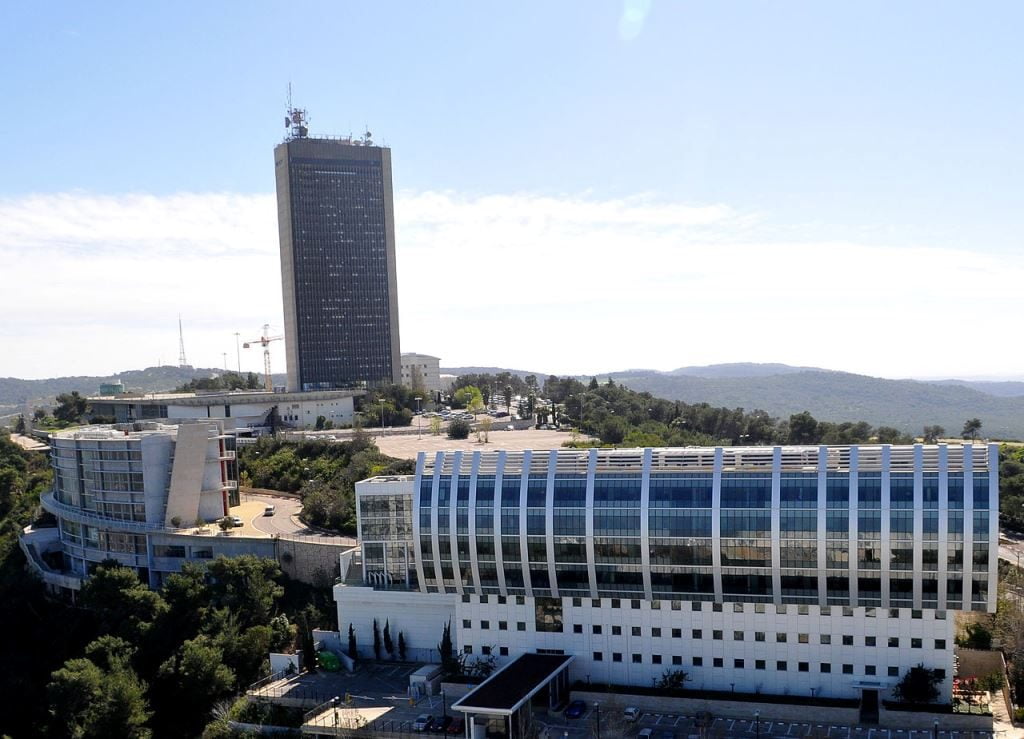
US Philanthropist Donates $10M To University Of Haifa For New Campus
 May 30, 2018 | American philanthropist Lorry I. Lokey, the founder of media services provider Business Wire, has donated $10 million to the University of Haifa for the construction of a new campus. According to a statement on Wednesday, Lokey was “inspired by [the] University of Haifa’s unique ‘multiversity’ model: a multi-campus institution with locations around Haifa and throughout northern Israel, easing access for students and adding vitality to its city and region, while allowing a wide range of ideas and activities to flourish in a diverse community.” The new campus will consist of at least four buildings located throughout the Port of Haifa and the city’s downtown area. Lokey said the university was “pioneering an important new paradigm for institutions of higher learning through its multiversity, and is infusing new energy into the city, region and entire country. While my relationship to the University is relatively new, this gift is an affirmation of its mission to improve access to education and bring more jobs, stability and security to northern Israel by establishing a downtown campus.” He called on other philanthropists to join him in “transforming what is becoming one of Israel’s most important universities.”
Alibaba Group Leads $26.4M Funding Of Israeli GPU Database Developer SQream
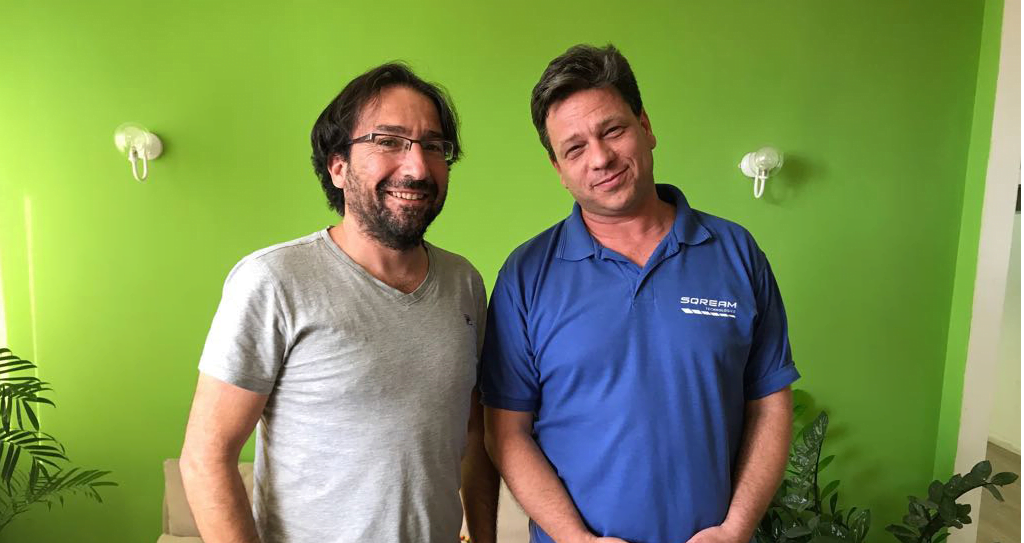
 May 30, 2018 | Tel Aviv-based startup SQream, a GPU database provider that analyzes data stores cost effectively, announced it has raised $26.4 million in a Series B funding round led by China’s multinational e-commerce giant Alibaba Group. The round also had participation from new and existing investors that included Hanaco Venture Capital, Sistema.vc, World Trade Ventures, Paradiso Ventures, Glory Ventures, and Silvertech Ventures. The funding from the e-commerce group is considered a “stategic investment” that “deepens the relationship between Alibaba Cloud and SQcream,” according to a statement. The companies already announced a collaboration agreement in February for Alibaba Cloud customers. “SQream is uniquely positioned to provide enterprises with the solution they require to lower the barrier for accessing and analyzing rapidly growing, large-scale data stores in the cloud. We are pleased to expand our relationship with SQream, and work together to accelerate the growth of the cloud industry,” said Chaoqun Zhan, Director of Alibaba Database Business. SQream was founded in 2010 by Ami Gal, Kostya Varakin, and Razi Shoshani. It is known for its SQL analytical database SQream DB, which gives companies the opportunity to analyze “up to 20 times more data, up t0 20 times faster, at as little as 10 percent of the cost and administration.”
New Database Tracks Israeli Tech Developed In Universities, Research Institutes
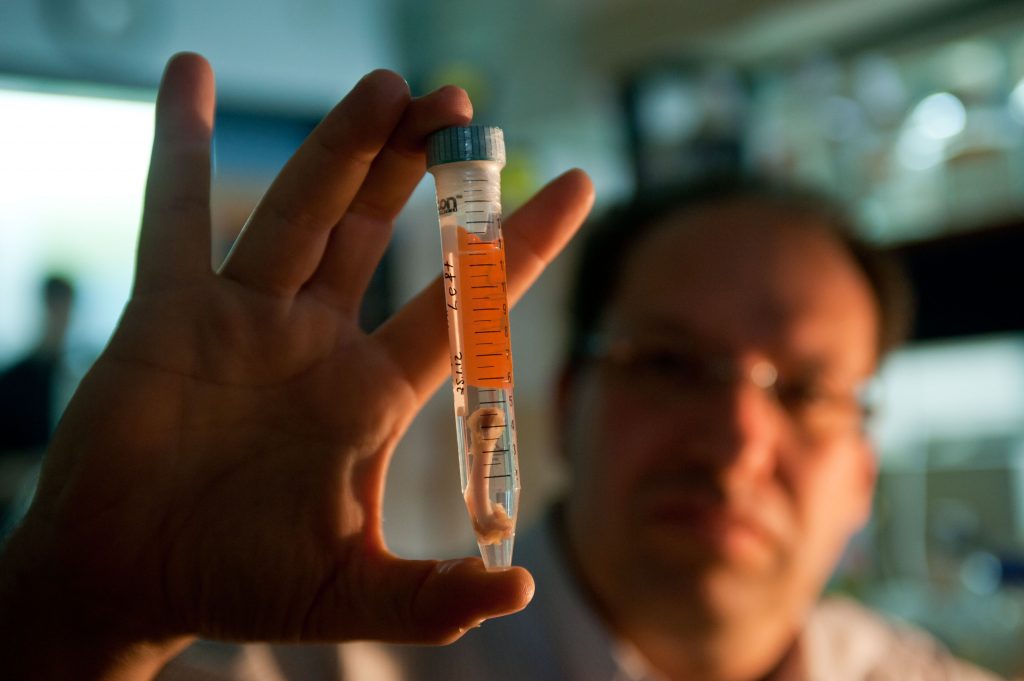
 May 28, 2018 | Israeli non-profit Start-Up Nation Central announced that it has launched a new database tracking some 1,300 technologies being developed in Israeli universities, medical centers, and and research institutions. The new searchable database is part of Start-Up Nation Finder, a free discovery platform already available by Start-Up Nation Central. The database looks at “emerging technologies in drug discovery, advanced materials science, gene sequencing, robotics, and other fields, through cataloguing the patents, companies, and researchers that are registered at 16 Technology Transfer Organizations (TTOs) in Israel. The database includes 323 technologies in the life sciences and biotech sector, 132 technologies in the chemistry and material sciences sector, 111 in the computer science and engineering sector, 111 in the medical devices sector, 94 in the pharmaceuticals and diagnostics sector, 80 in the communication and IT sectors, 67 in the cleantech and environment sectors, 65 in the physics and electro-optics sector, 53 in the agriculture, food and nutrition sector, and 14 in the defense and security sector. Prominent Israeli companies that started out as university research include vision sensor startup Mobileye, wearable robotic exoskeleton ReWalk Robotics, and AI medical imaging startup Zebra Medical Vision. “Academia is the main pillar of the Israeli tech ecosystem and TTOs serve as a bridge between cutting-edge academic research and a global community of entrepreneurs, startups, investors, and corporates,” Eugene Kandel, CEO of Start-Up Nation Central, said in a statement. “Adding the layer of emerging technologies expands the scope of information that Start-Up Nation Central provides to the Israeli innovation ecosystem, as well as to businesses, governments, and organizations around the world who are looking for innovative solutions to their biggest challenges,” he added.
